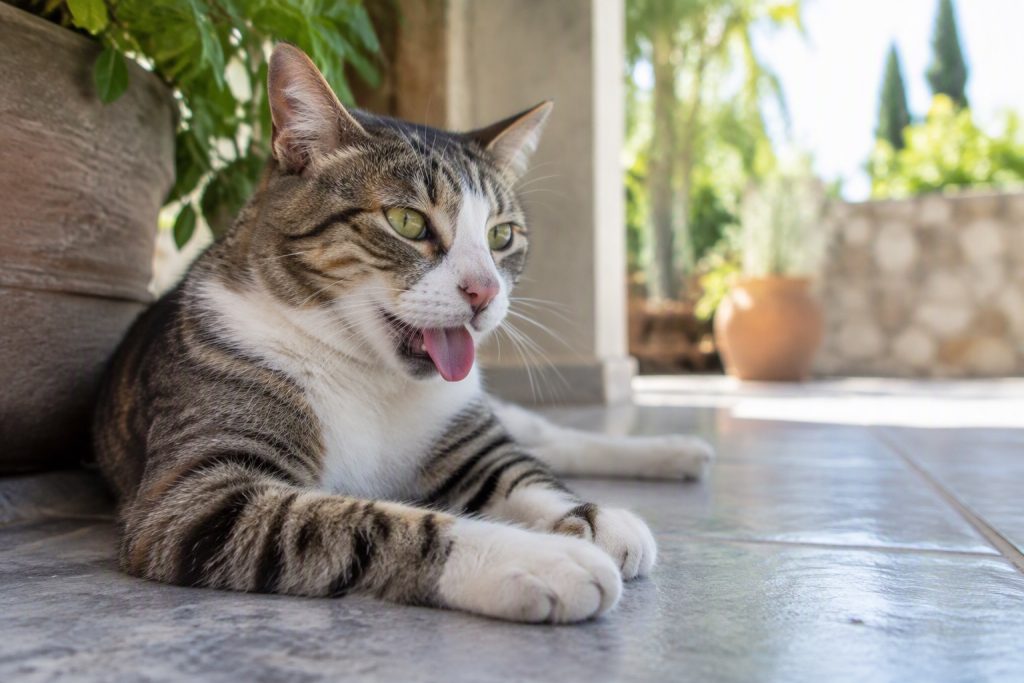
Cats overheat faster than many owners expect because they cannot sweat through their skin and rely on panting and grooming to lose heat. In a heatwave, keep your cat indoors during the hottest hours, provide shade, cool water, and cool surfaces to lie on, and never leave her in a parked car or a room without ventilation. Watch closely for panting, drooling, and lethargy, because those can signal heatstroke, which is a medical emergency that needs immediate vet care.
- Keep her indoors during the hottest hours.
- Offer shade, cool water, and cool surfaces.
- Never leave a cat in a car or a hot room.
- Panting, drooling, or wobbling needs urgent care.
How do I keep my cat cool in a heatwave?
Start with the basics: shade, air movement, and cool water. Close curtains or blinds on sun-facing windows during the day to stop rooms heating up, and open windows at night when the air is cooler. A fan helps, but place it so your cat can choose whether to sit in the breeze rather than blasting her directly, and never point a fan at her constantly. Offer several bowls of fresh, cool water around the house, and consider adding wet food or a little water to her meals to boost her fluid intake. Cool surfaces matter too, so leave a tiled floor or a sink accessible, or provide a cooling mat. If your home gets very hot, a damp towel on the floor in the shade gives her somewhere to lie. Never shut her in a small, unventilated room, and check that any outdoor enclosure or balcony has deep shade and water at all times.

A thickened cloth bed is stepped into rather than climbed over. Try it near the window first, then…
How do I know if my cat is overheating?
Mild heat stress shows up as restlessness, seeking out cool floors, lying stretched out, and grooming more than usual. As it worsens, you may see heavy panting, which is abnormal in cats and always a warning sign, along with drooling, bright red gums or tongue, a rapid heartbeat, and skin that feels hot to the touch. A cat in real trouble becomes weak, wobbly, confused, or unresponsive, and may vomit or collapse. These are signs of heatstroke, which can cause organ damage and can be fatal. If you see heavy panting or any of the later signs, move her to a cool place, wet her coat with cool, not ice-cold, water, offer a drink if she is alert, and call your vet or an emergency clinic immediately. Do not wait to see if she improves on her own, because heatstroke can progress very quickly.
Where should my cat rest during hot weather?
Cats will seek out the coolest surfaces they can find, so make those surfaces easy to reach. Tiled bathroom floors, a sink, a shaded hallway, and the space under a bed are all natural favourites. You can help by placing a cooling mat, a damp towel, or a shallow tray of cool water in a shaded spot, and by making sure the coolest room in the house stays open to her. Cats also like to be elevated, so a perch in a shaded, well-ventilated spot works well, but avoid leaving her favourite window perch in direct sun during the middle of the day. If you have a garden or balcony, check that she has deep shade and fresh water, and bring her inside during the hottest hours. Providing several cool options in different rooms lets her regulate her own temperature, which is exactly what she wants to do.
Should I wet my cat to cool her down?
For a cat who is merely warm, gently stroking her coat with a damp cloth or offering a cool mat is often enough, and many cats enjoy it. Do not soak her or use ice-cold water, because sudden cold can constrict blood vessels and actually trap heat, and it can shock a cat who is already stressed. If she is showing signs of heatstroke, wet her coat with cool water, especially the paws, ears, and belly, and place her in front of a fan, but get her to a vet as you do so. Never immerse a cat in water or use ice packs directly against the skin. Some cats dislike water intensely, so forcing a bath on a hot but otherwise healthy cat can cause more stress than benefit. The goal is gradual cooling, not a shock to the system. Our guide to keeping your cat cool in summer covers more gentle options.
Tray, scoop, anti-splash mat and clumping litter. The whole litter corner, one box. Keeps the litter area contained,…
What should I never do in hot weather?
Never leave your cat in a parked car, even for a few minutes with the windows cracked, because temperatures inside rise dangerously fast. Never shut her in a conservatory, greenhouse, shed, or small room without ventilation, since these spaces turn into ovens. Do not leave her without water, and check that bowls have not been tipped or evaporated, especially if you are out all day. Avoid vigorous play during the hottest hours, and never exercise her in the sun, because play raises body temperature. Do not clip her coat short to “keep her cool” without advice, since the coat insulates against heat as well as cold and protects against sunburn. Avoid walking her on hot pavement, which can burn her paws, and skip car trips unless necessary. Finally, never assume she will move herself out of danger. Cats often stay in a warm spot long past the point of comfort, so it is your job to intervene. Our article on cooling mats for cats shows safe ways to help.
When is overheating an emergency?
Treat overheating as an emergency if your cat is panting heavily, drooling, breathing fast, or has bright red gums, and especially if she is weak, wobbly, confused, vomiting, or unresponsive. These signs mean heatstroke, and every minute counts. Begin cooling her immediately by moving her to a cool, shaded place, wetting her coat with cool water, and offering a drink if she is alert, then call your vet or an emergency clinic on the way. Flat-faced breeds such as Persians, older cats, overweight cats, and those with heart or breathing conditions are at much higher risk and can deteriorate very quickly. Do not wait to see if she perks up, and do not try to treat heatstroke at home alone, because a vet may need to give fluids and support her organs. Prevention is far easier than treatment, so on hot days assume the worst can happen and plan accordingly.
Frequently asked questions
- Is panting normal in cats? No. Occasional panting after intense play can happen, but heavy or persistent panting is a warning sign.
- Can cats get heatstroke indoors? Yes, especially in hot, unventilated rooms or conservatories. Keep rooms shaded and ventilated.
- Should I shave my cat for summer? Usually not. The coat insulates against heat. Ask your vet or groomer first.
- How much water should my cat drink in a heatwave? More than usual. Offer several fresh bowls and add wet food to her diet.
- Are cooling mats safe for cats? Yes, if she can move off them freely. Never use ice packs against bare skin.