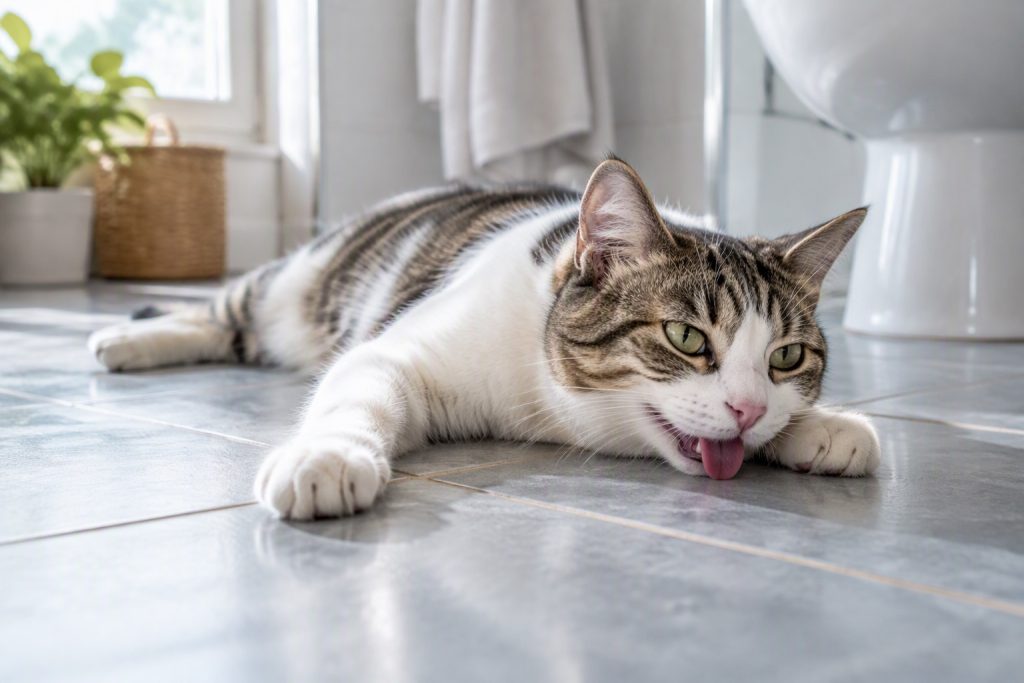
The first signs of heatstroke in a cat are heavy, open-mouthed panting, drooling, restlessness, and a bright red tongue or gums. As it worsens, a cat may become weak, wobbly, confused, or start vomiting, and can collapse or have a seizure. Heatstroke is a life-threatening emergency, so if you see these signs, start cooling your cat immediately and contact a vet without delay.
- Open-mouth panting is the key early sign.
- Move her to shade or air conditioning at once.
- Cool with room-temperature water, not ice.
- Call a vet even if she seems to improve.
What are the first signs of heatstroke in a cat?
Cats normally breathe through their noses and rarely pant, so any sustained panting is a warning. Early heatstroke often begins with rapid, open-mouthed breathing, increased drooling, and a cat who seems restless or agitated, pacing and seeking a cool surface. Her gums and tongue may look bright red rather than a healthy pink, and her skin may feel hot to the touch. She might breathe noisily, refuse food, or seem unusually quiet. As the condition progresses, signs become more serious: weakness, stumbling, confusion, vomiting, diarrhoea, tremors, and eventually collapse, seizures, or unconsciousness. The very young, the elderly, flat-faced breeds such as Persians, and cats with heart or breathing conditions are at higher risk. Cats left in cars, conservatories, or sunny rooms without shade are especially vulnerable. Because cats mask illness, the panting stage may pass quickly, so act the moment you notice it.

A thickened cloth bed is stepped into rather than climbed over. Try it near the window first, then…
How do I tell heatstroke from normal panting?
Context and duration are the deciding factors. A cat may pant briefly after vigorous play, a stressful car journey, or a vet visit, and that usually settles within a minute or two once she rests in a cool place. Heatstroke panting is different: it is heavy and persistent, it does not ease with rest, and it comes with other signs such as drooling, red gums, wobbliness, or distress. Normal post-exertion breathing is quiet and returns to normal quickly; heatstroke breathing is loud, open-mouthed, and worsening. Environment matters too, since panting in a hot room, a car, or direct sun is far more suspicious than panting after a chase. If your cat is panting and the room is warm, treat it as possible heatstroke until proven otherwise. Do not wait to see if it passes. Cool her down and call your vet. When in doubt, it is always safer to assume the worst, because heatstroke can progress within minutes. Our article on keeping a cat cool in summer covers prevention in detail.
What should I do first if my cat has heatstroke?
Act immediately and calmly. Move your cat to a cool, shaded, well-ventilated area, ideally an air-conditioned room, and away from direct sun. Offer her cool water to drink if she is alert, but never force it. Begin cooling her gently by wetting her fur with room-temperature or lukewarm water, focusing on her paws, belly, armpits, and the back of her neck, where heat exchange is efficient. You can also place cool, damp towels under her and drape a wet cloth over her, and use a fan to increase airflow, as long as it is not blowing hot air. Keep the water cool rather than cold, and monitor her breathing. Phone your vet or an emergency clinic straight away for advice and to say you are coming. Even if she seems to recover, she must be seen, because heatstroke can cause internal damage, swelling of the brain, and organ failure that is not visible from the outside.
What should I NOT do when cooling a cat?
Do not use ice, iced water, or very cold water, and do not put your cat in a freezer or an ice bath. Rapid cooling with ice constricts the blood vessels near the skin, which traps heat inside and can worsen the situation, and it risks causing shock. Do not immerse a struggling cat fully in water, and never leave a wet cat unattended in a draught, as she can chill quickly once her temperature drops. Avoid wrapping her tightly in heavy towels, which holds heat in. Do not give human medications, including fever reducers such as paracetamol or ibuprofen, which are toxic to cats. Do not delay calling a vet to see if she improves on her own, and do not assume that a cat who starts to look better is out of danger. Once she is stabilised, ongoing care may still be needed. For recovery, a cool mat can help her settle, as we cover in our guide to cooling mats for cats.

Cervical pillow, plush hammock, floor mat and paw cushion — four places to nap. Gives a cat a…
How do I prevent heatstroke?
Prevention is straightforward once you know the risks. Never leave a cat in a parked car, even for a few minutes with the windows cracked, as temperatures rise dangerously fast. Keep your home cool by closing curtains and blinds against direct sun during the hottest hours, and use fans or air conditioning. Make sure fresh, cool water is always available, and consider adding extra bowls or a fountain, since cats often drink more from moving water. Offer cool resting spots such as tiled floors, a cooling mat, or a shaded box, and let your cat choose where to settle. Time play sessions for the cooler parts of the day, and avoid vigorous games in the heat. If your cat has a flat face, a heart condition, or is older or overweight, be extra careful. On very hot days, keep her indoors and keep the room ventilated. A little planning prevents a serious emergency.
When is heatstroke an emergency?
Heatstroke is always an emergency, but some signs demand immediate, urgent care. Call for emergency help at once if your cat is panting heavily and cannot settle, if she is wobbly, confused, or collapsing, if she vomits or has diarrhoea, or if she becomes unresponsive or has a seizure. These signs mean the body is overheating dangerously and organs may be at risk. Even mild panting in a hot environment should be treated seriously, because cats deteriorate quickly. Begin cooling on the way to the vet, but do not delay transport to cool her further. If you are unsure whether it is heatstroke, phone your vet for advice; they would rather talk you through it than have you wait. Cats who survive heatstroke can have lasting organ damage, so follow-up care matters. Never treat it as something that will simply pass with rest.
Frequently asked questions
- Do cats pant when hot? Only rarely, so panting in a warm environment is a serious warning sign.
- Can I use ice to cool my cat? No. Use cool or room-temperature water; ice can trap heat and cause shock.
- Is heatstroke common in indoor cats? Yes, especially in hot rooms, conservatories, or sunny windows without shade.
- My cat seems fine after cooling. Do I still need a vet? Yes. Internal damage may not be visible, so she must be checked.
- Which cats are most at risk? Kittens, seniors, flat-faced breeds, and cats who are overweight or unwell.