

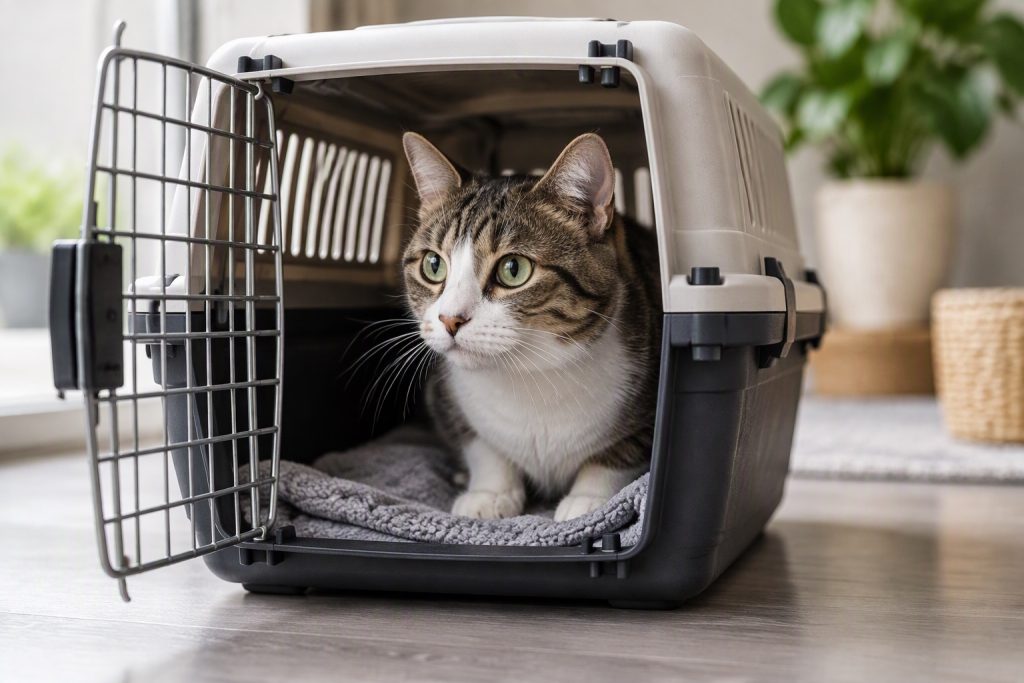
The best hard-sided cat carrier is rigid, well ventilated, easy to open from the top as well as the front, and large enough for your cat to stand, turn around, and lie down. A hard shell protects her far better in a crash or a fall than soft fabric, and it holds its shape when you need to lift a frightened cat out. Look for secure latches, a metal door, and a size that fits both your cat and your car.
- A rigid shell protects better in a crash or drop.
- Top-opening doors make vet visits far easier.
- She must be able to stand, turn, and lie flat inside.
- Secure latches and metal doors beat plastic clips.
Why choose hard-sided over soft-sided?
A hard-sided carrier is built to hold its shape under pressure, which matters most in an accident or if you drop it. In a crash, a soft carrier can collapse and crush or release your cat, while a rigid shell keeps a protective space around her. Hard carriers are also easier to clean, because a plastic or metal surface wipes down and does not absorb urine or vomit the way fabric does. They stack and store neatly and stand up to years of use. The trade-off is weight and bulk, which matters if you carry your cat long distances or travel by air. For everyday vet trips, a hard carrier is usually the safer and more durable choice, especially for a cat who panics and pushes against the sides. Our guide to the best airline-approved carrier covers the travel-specific rules. If you travel by car most of the time, a hard carrier is usually the better long-term investment. Soft carriers have their place, but for routine vet visits and car travel, rigidity and durability win.
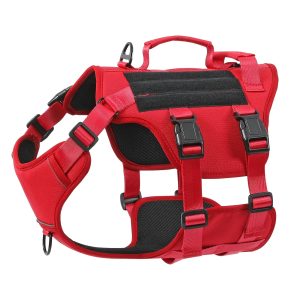
A fabric and Oxford cloth harness stays close enough that a cat cannot back out of it. Take…
What size carrier does my cat need?
Bigger than most people buy. Your cat should be able to stand up without crouching, turn around fully, and lie down stretched out. A carrier that is too small forces her into an uncomfortable position and makes the whole experience worse, and a cat who cannot stand will often panic more. Measure her from nose to tail base and add a few inches in every direction, and check the height from floor to the top of her head when standing. If she is between sizes, choose the larger one. That said, do not go so large that she slides around inside; the carrier should feel snug enough to brace against during movement. A soft blanket or towel packed around the base helps her stay stable. Weigh the carrier with your cat inside before you buy, because a heavy cat in a heavy carrier becomes hard to carry safely.
Which features matter most?
Prioritise a top-opening door, because it lets a vet lift your cat out while keeping her supported, which is far less stressful than dragging her through a front door. A metal door with a secure latch is stronger and less likely to pop open than plastic clips, so check how the door locks and whether it can be operated one-handed. Ventilation should be generous on more than one side, so air flows even when the carrier is covered with a towel. Look for rounded interior edges with no sharp points, a base that sits flat without wobbling, and a handle that is comfortable to carry when the carrier is full. Removable bases and wipe-clean interiors make cleaning much easier after an accident. Check that the door latch cannot be flipped open by a determined paw, since a clever cat can learn to work simple catches. A removable top half makes cleaning and vet handling easier still.
How do I make the carrier less frightening?
Leave it out at home all the time, with the door open and a soft blanket inside, so it becomes part of the furniture rather than a signal that something bad is coming. Feed her near it, toss treats inside, and let her nap in it on her own terms. Spray it with a calming pheromone and add a worn T-shirt of yours so it smells familiar. Never use the carrier only for vet trips, or she will learn to avoid it. When you do need to travel, cover the carrier with a light towel to block the moving view, and keep your own manner calm and unhurried. A cat who has a positive relationship with her carrier is dramatically easier to handle. Our guide on the best cat carrier backpack is useful if you prefer a wearable option. Once she naps in it voluntarily, most of the battle is already won. Feeding her inside the carrier, with the door open, builds a positive association faster than any treat tossed in from outside.

Bundle of multicoloured printed leashes. Made from fabric. Made for walks, travel and everyday wear. Keeps your cat…
How do I clean and store it?
Wipe the interior with warm water and a mild, pet-safe cleaner after every trip, and let it dry fully before storing, because a damp carrier grows odour and mould. Avoid strong scented disinfectants, which can put your cat off the carrier entirely. For accidents, remove the bedding, wash it separately, and scrub the base with a diluted pet-safe product, then rinse well. Store the carrier somewhere dry and out of direct sunlight, with the door left slightly open so air circulates and it does not smell stale. If you have more than one cat, keep a carrier per cat, because sharing one after a stressful trip spreads the scent of fear. Check the latches and door hinges occasionally for wear, especially before air travel. Storing the carrier with the door ajar also stops it smelling stale, which makes it more appealing to her.
What about airline and car travel rules?
For air travel, airlines set strict size limits, and most require the carrier to fit under the seat in front of you for in-cabin travel. Hard-sided carriers are usually only accepted for cargo, while soft-sided ones are typically required in the cabin, so check your airline’s rules before buying. For car travel, secure the carrier with a seatbelt or a strap so it cannot slide or become a projectile, and place it on the seat rather than the floor where it may be kicked or overheated. Never leave a cat in a parked car, even briefly, because temperatures rise fast. If you are flying, confirm the airline’s requirements well in advance and practise with the carrier beforehand so the journey is not her first experience of it. A trial run to a friend’s house, ending somewhere pleasant, teaches her that the carrier does not always mean the vet.
Frequently asked questions
- Are hard-sided carriers better than soft ones? They protect better in a crash and are easier to clean, but soft ones are lighter and often required in aircraft cabins.
- What size carrier should I buy? Big enough for your cat to stand, turn, and lie down, but not so large that she slides around inside.
- Do I need a top-opening carrier? It is not essential, but it makes vet visits and handling much easier and less stressful for your cat.
- How do I stop my cat hating the carrier? Leave it out permanently, feed her near it, and never use it only for vet trips.
- Can I use the same carrier for two cats? It is better to have one carrier per cat to avoid spreading the scent of stress.





