

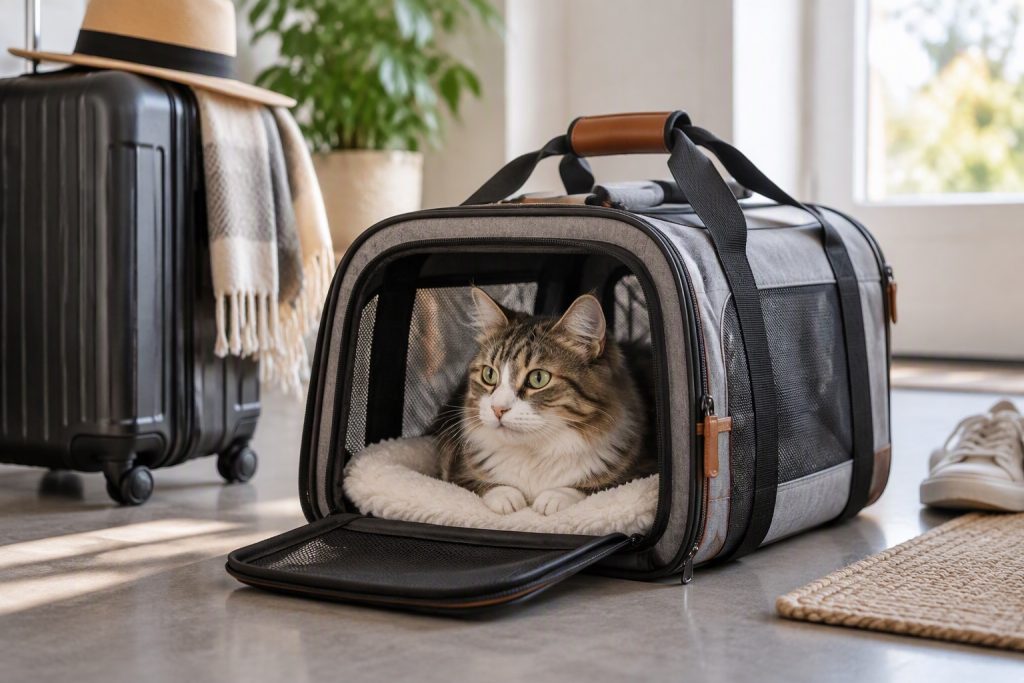
The best airline-approved cat carrier is one that fits your airline’s exact size and weight limits, is well ventilated on at least two or three sides, and is secure enough that your cat cannot push her way out. Soft-sided carriers suit in-cabin travel under the seat, while hard-sided carriers are required for cargo on most airlines. Check your specific airline’s rules before buying, and get your cat used to the carrier weeks before travel so the journey is calmer for both of you.
- Check your airline’s exact size and weight limits.
- Choose a secure, well-ventilated carrier.
- Soft-sided for under-seat, hard-sided for cargo.
- Acclimatise her to it weeks in advance.
What makes a cat carrier airline-approved?
An airline-approved carrier meets the size, ventilation, and security rules set by the airline you are flying with, and those rules are not identical across carriers. In general, the carrier must be large enough for your cat to stand, turn around, and lie down comfortably, well ventilated on multiple sides, and secure with a fastening that will not open if the bag is bumped. For in-cabin travel, the carrier must fit under the seat in front of you, which usually means a soft-sided bag with a firm base and flexible top. For cargo, most airlines require a rigid, hard-sided crate with a metal door and secure latches. Some carriers come with airline-specific approval labels, but the only reliable check is your airline’s own written policy, so read it carefully and measure your carrier before you book.
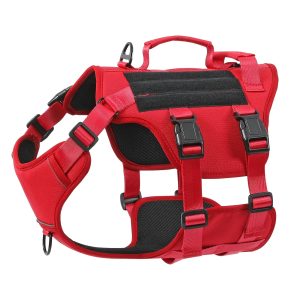
A fabric and Oxford cloth harness stays close enough that a cat cannot back out of it. Take…
Should I choose a soft-sided or hard-sided carrier?
Soft-sided carriers are the practical choice for in-cabin travel, because they are lightweight, easy to carry, and flexible enough to squeeze under a seat that a rigid crate would not fit. Look for one with a solid base so your cat is not standing on a sagging floor, mesh panels on several sides for airflow, and strong zips with locking clips to prevent escape. Hard-sided carriers are sturdier and are usually required for cargo travel or for a cat who is a determined escape artist. They are easier to clean, which matters on long journeys, and they hold their shape. Many owners keep both: a soft carrier for vet visits and short car trips, and a hard crate for flights. Whichever you choose, size it so your cat can stand upright and turn around without crouching, and check the weight limit for in-cabin pets, since the carrier counts toward it.
What size carrier does my cat need for flying?
Size is the detail most owners get wrong. The carrier should be tall enough for your cat to stand without her head touching the top, long enough for her to lie fully stretched out, and wide enough for her to turn around inside. Measure your cat from nose to base of tail while she is standing, add a few centimetres, and compare that to the carrier’s internal dimensions, not the outer ones, because the walls and padding take up space. Then check that those internal dimensions meet your airline’s under-seat or cargo limits, which are usually stated as maximum length, width, and height. If your cat is large, look for a carrier designed for bigger cats, and if she is a kitten, do not buy one she will outgrow before the trip. When in doubt, take your cat’s measurements to the airline’s rules and choose the largest carrier that still fits.
How do I get my cat used to a carrier?
Preparation matters more than any product, because a cat who has never seen the carrier will panic on travel day. Start weeks in advance by leaving the carrier open in a room she uses, with a soft blanket inside and a few treats or toys, so it becomes familiar furniture rather than a trap. Feed her near it, then inside it, and reward her for going in on her own. Once she is comfortable, close the door for a few seconds and gradually build up to a few minutes, always with calm praise and treats. Take short car rides that end somewhere pleasant, not always at the vet, so she learns that the carrier does not automatically mean something unpleasant. On the day of travel, put a familiar-smelling item inside, keep the carrier covered partly with a light cloth to reduce visual stress, and avoid sedating her unless your vet has prescribed something. Our guide to the best carrier for vet visits uses the same training steps.

Bundle of multicoloured printed leashes. Made from fabric. Made for walks, travel and everyday wear. Keeps your cat…
What do airlines require for in-cabin travel?
Airlines that allow cats in the cabin generally require that the cat stays inside the carrier for the whole flight, that the carrier fits under the seat in front of you, and that you have booked a pet space in advance, since only a limited number of pets are allowed per flight. You will usually need a health certificate or proof of rabies vaccination, and some destinations require additional paperwork, so check well ahead. The cat counts as a carry-on item on many airlines, and there is often a fee. Arrive early, because you will need extra time at check-in. Keep the carrier closed and under the seat for taxi, take-off, and landing, and do not take your cat out during the flight, even if she seems calm. Rules vary widely by airline and route, so confirm the details directly with your airline before you book, and again a week before you fly, in case anything has changed.
How do I keep my cat calm during the flight?
Calm starts long before boarding. A tired, well-exercised cat is easier to settle, so give her a good play session before you leave, and feed a light meal a few hours ahead rather than right before the flight. Line the carrier with an absorbent pad in case of accidents, and place a familiar-smelling cloth inside. During the flight, keep the carrier partly covered so she can hide from the busy cabin, but leave the ventilation panels clear, and speak to her quietly without opening the bag. Do not give her food or water mid-flight unless your vet advises it, and never medicate her for the flight without veterinary guidance, because some sedatives are risky at altitude. Cats usually settle once the cabin noise becomes steady. If she cries, a calm hand on the outside of the carrier often helps. Our article on travelling with a cat covers the whole journey.
Frequently asked questions
- Can my cat fly in the cabin with me? Often yes, if the airline allows it and the carrier fits under the seat. Book the pet space early.
- Is a soft carrier accepted by airlines? Usually for in-cabin travel, provided it fits the under-seat dimensions. Check your airline’s rules.
- Should I sedate my cat for a flight? Only if your vet prescribes it. Never give human or over-the-counter medication.
- How big should a carrier be for flying? Big enough to stand, turn, and lie down, but within the airline’s size limits.
- How early should I train my cat for the carrier? Start at least two to three weeks before travel, using short, positive sessions.





