

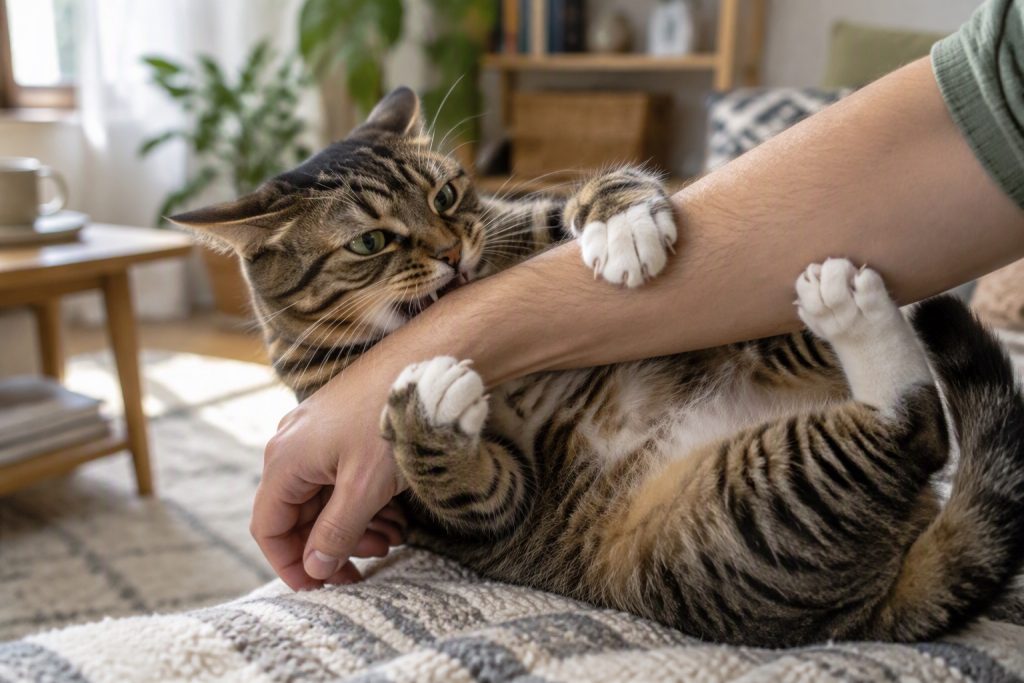
Play aggression is what happens when a cat’s hunting instinct meets a moving target it can actually catch, which is usually a hand or an ankle. It looks alarming, and it can hurt, but it is not the same as aggression driven by fear or territory. The giveaway is the body language: a cat in play has its ears forward, its pupils wide, and it keeps coming back for more. A cat that is genuinely aggressive flattens its ears, hisses and wants the interaction to stop, so the distinction matters a great deal — the two need almost opposite responses from the person on the receiving end.
- Play aggression is hunting behaviour aimed at moving hands and feet, not a dominance problem.
- Ears forward and repeated returns point to play; flattened ears and hissing point to fear.
- The fix is to redirect the behaviour onto toys and never use hands as play objects.
- A sudden change in a previously gentle cat is worth a vet check.
Why does my cat attack my hands and ankles?
Because hands and ankles move like prey, and a cat with unspent energy will take the opportunity. Kittens learn this fastest, because they have the strongest play drive and the least practice at inhibition, but adult cats do it too when they are bored or under-exercised. The behaviour is usually self-reinforcing: the hand jerks away, which looks exactly like escaping prey, and the cat learns that the game is worth repeating. Ankles are targeted for the same reason, particularly when someone walks past a hiding spot. Cats that were hand-played with as kittens are the most likely to keep doing it, because the behaviour was taught by the people who now find it unpleasant. Redirecting onto a proper toy is the whole solution in most cases.
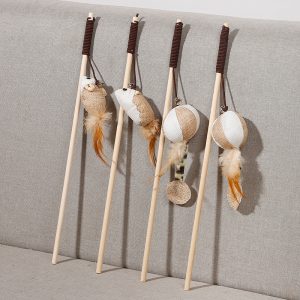
This cat toy keeps a cat busy when you cannot play — play is what a cat does…
How do I tell play aggression from real aggression?
Read the whole body, not the bite. In play, the cat’s ears stay forward or neutral, the pupils are often dilated, the claws are usually sheathed or only partly out, and the tail moves in a relaxed way. The cat breaks off, looks at you, and comes back for more. In real aggression, the ears flatten sideways or back, the pupils narrow, the body turns away or crouches, the tail lashes tightly, and there is hissing, growling or a hard stare before contact. A fearful cat bites once and retreats; a playful cat keeps engaging. There is also a middle category of overstimulation, where a cat being stroked suddenly bites because it has had enough. That is a different problem, solved by learning the cat’s warning signs and stopping earlier.
How do I stop a kitten biting hands?
Stop offering hands as toys, immediately and completely. Every time a hand becomes a play object, the lesson is reinforced, so the single most effective change is to end that entirely. When the kitten goes for your hand, freeze rather than pulling away, because a still hand is not interesting prey, then redirect to a wand toy and reward the switch. If the kitten keeps biting, end the session calmly and walk away for a minute, which teaches that biting stops the game. Do not hit, tap the nose or scruff the kitten, because those responses either look like more play or teach fear. Kittens usually grow out of the worst of it as they mature, and a second kitten is often the fastest teacher of bite inhibition, because a littermate will not tolerate it.
Should I ever punish a cat for biting?
No, and it usually makes things worse. Punishment does not teach a cat what to do instead, and it does not remove the drive that produced the behaviour. What it does reliably is add fear, which turns a playful bite into a defensive one and makes the cat avoid you. A cat that is shouted at or sprayed after biting learns to bite and then run, which is more dangerous than a cat that stays in the room. The alternative is to prevent the situation: keep hands out of play, give the cat a proper outlet, and end sessions before the cat gets over-aroused. If a cat bites during handling, the answer is to shorten the handling and to look at why the cat is uncomfortable, which may be a health question rather than a training one.
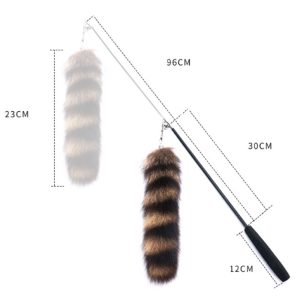
Teaser wand designed to turn a few minutes into a full hunt — a cat needs to finish…
Why does my cat ambush my ankles?
Ambushing is a normal hunting behaviour, and ankles are simply the most available moving target in a house. The classic pattern is a cat that hides behind a door or under furniture and launches at feet as they pass, often at the same times of day. It is more common in young cats, in cats left alone for long periods, and in the evening when energy peaks. The fix is not to punish the ambush but to give the cat a better hunting outlet earlier in the day. A structured play session that ends with a catch, followed by a meal, uses up the drive that produces the ambush. If the pattern is fixed, avoid the hiding spot for a few days while the routine is established. More ideas are in night zoomies.
When is biting a health or behaviour concern?
Biting becomes a concern when it is new, when it escalates, or when it comes with signs of fear or pain. A cat that has always been gentle and starts biting needs a vet appointment, because pain, dental disease and arthritis commonly show up as irritability when the cat is touched. So does a cat that bites when picked up or when a particular area is handled. If a vet finds nothing physical, a qualified feline behaviour professional can assess the pattern, the environment and the cat’s history. Watch also for redirected aggression, where a cat that is frustrated by something it cannot reach, such as a cat outside the window, attacks whoever is nearest. That is a stress problem rather than a play problem. See whether the cat is bored for the under-stimulation side.
Frequently asked questions
- Do cats grow out of play biting? Many do as they mature and their energy drops, but only if the habit is redirected. A cat that keeps being hand-played tends to keep biting.
- Should I hiss at my cat when it bites? Some owners report it works, but it can frighten a sensitive cat. Ending the session calmly is a more reliable and less risky response.
- Is it ever affectionate when a cat bites? Gentle mouthing without pressure can be a form of contact, but a hard bite is not affection. Judge by the force and the body language.
- My cat bites only me and not my partner. Why? Usually because one person has been the play target. Change the pattern with that person specifically, and use toys instead of hands.
- Can play aggression be a sign of something wrong? Usually not, but a sudden change in a previously calm cat should be checked by a vet before it is treated as behaviour.


