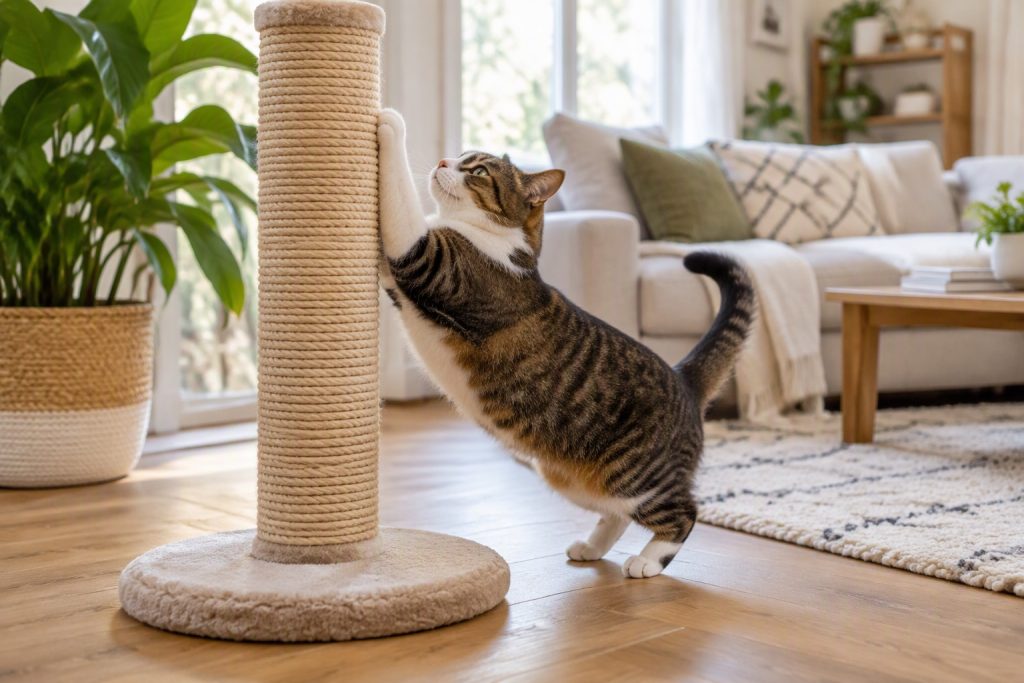
The best floor scratching post is a tall, stable, sisal-wrapped post that lets your cat stretch fully upright without tipping over. It should sit flat on a wide, heavy base that stays put on carpet or hard floor, and it needs to be at least as tall as your cat with her front legs fully extended. Sisal rope or dense carpet works best; flimsy posts that wobble get ignored.
- Tall enough for a full vertical stretch.
- Wide, heavy base so it never tips.
- Sisal rope or dense carpet lasts longest.
- Stable on both carpet and hard floors.
How tall should a floor scratching post be?
Taller than most people expect. A cat scratches to stretch her whole body, mark territory, and shed the outer sheaths of her claws, and she needs to reach up with her front legs fully extended to do it properly. That means the post should be at least as tall as your cat is long from nose to tail base when she stands on her hind legs, and ideally a little taller. A short post forces her to scratch at an awkward angle, so she will abandon it for your sofa arm. For an average cat, look for something around 30 inches or more; for a large breed, go higher. Stability matters as much as height, because a tall post on a small base will topple the moment she pulls on it. Our guide to the best cat scratching post compares the main styles. A post that is slightly too tall is better than one that is too short, because she can always scratch lower down. A post she can grip and pull against will always beat a decorative one that only looks good.
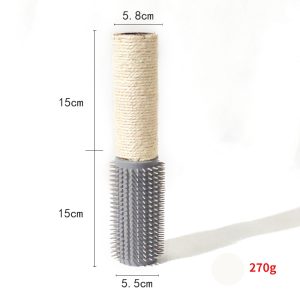
Sisal-wrapped post with a grooming brush base. Made from mixed materials. Made for scratching and stretching. Gives claws…
Which material do cats prefer?
Sisal rope is the classic choice and works for most cats, because its rough fibres catch the claws and let her shed the outer sheaths. Look for tightly wound, thick sisal rather than a thin, loose wrap that shreds within weeks. Dense, tight-loop carpet is a good alternative and is often preferred by cats who like a softer surface, though it sheds and can look scruffy over time. Corrugated cardboard is cheap and very popular with many cats, but it wears out quickly and tends to make a mess. Avoid slick materials, and avoid anything treated with strong chemicals. Some cats have a clear preference, so if you already know she scratches carpet, buy a carpet post. Our article on the best carpet scratching post covers that option in detail. If you are unsure what she prefers, offer one sisal and one cardboard scratcher and see which she chooses.
Why do wobbly posts get ignored?
Stability is not a small detail — it is often the whole reason a scratching post fails. When a cat pulls on a post, she is using real force, and if the post rocks, slides, or tips, she loses her footing and feels unsafe. Cats learn quickly to avoid anything that feels unstable, and they will go back to the solid, immovable corner of your sofa. This is why a heavy base, wide footprint, or a post you can weight down or secure matters so much. If your post wobbles on carpet, a non-slip pad underneath helps; on hard floor, rubber feet stop sliding. You can also place the post against a wall for extra support. A stable post gets used; an unstable one becomes a decoration. A post that is bolted to a wall or wedged into a corner is far more likely to be used than a freestanding one on a slippery floor.
Where should it go in the room?
Placement decides whether the post gets used. Cats scratch to mark territory, so they prefer to do it in prominent, social spots where they can see and be seen, not tucked away in a back room. Put the post near where she already scratches, such as beside the sofa arm or by a doorway, and near where she sleeps and plays. Give it a clear view of the room rather than a corner where she feels exposed from behind. If she scratches in several places, you may need more than one post, especially in a multi-cat home. Angle or corner posts can be useful where floor space is tight, but a floor post is usually the most satisfying for a full stretch. Never hide the post out of sight to keep the room tidy, or she will not use it. Rotating the post slightly, or moving it a foot, can make all the difference if she ignores it. Some cats prefer to scratch right after waking or eating, so watch her routine and place posts accordingly.
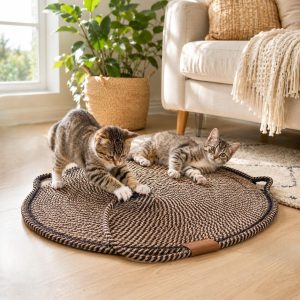
Woven cotton rope pad in an oval shape. Made from mixed materials. Made for scratching and stretching. Gives…
How do I stop my cat scratching the sofa instead?
You redirect rather than punish. Put the new post right next to the spot she scratches, so the choice is obvious, and reward her with a treat or praise whenever she uses it. Make the sofa less appealing by covering the scratched area with a throw, double-sided tape, or a slipcover while she learns, but do not remove the cover until she is reliably using the post. Trim her claws regularly so any accidental scratching does less damage, and never declaw, which is painful and harmful. If she scratches when she wakes or after eating, place posts at those spots too. Consistency is key: reward the post every time, and give the behaviour a week or two before judging it. Cats rarely switch overnight, but most will with patience. Trimming her claws every couple of weeks also reduces damage while she learns to use the post.
How long should a post last?
A good sisal post should last months to a couple of years, depending on how much your cat uses it. Replace or rewrap it when the rope is shredded, frayed, or falling away, because a worn post is less satisfying and may start to wobble. Many posts are designed with replaceable sisal sleeves, which is cheaper and less wasteful than buying a whole new unit. Cardboard scratchers wear out fastest, sometimes within weeks, but they are inexpensive to replace. Carpet posts last well but can shed fibres as they age. Whatever the material, check the base and the joins periodically, and tighten any bolts, because a post that has become loose will be abandoned. Keeping a spare cardboard scratcher on hand helps bridge the gap while you repair or replace the main post. Wrapping a worn post with fresh sisal rope is a cheap repair that gives it a second life. If the base has become loose, tightening the bolts is usually enough to restore stability.
Frequently asked questions
- What makes a good floor scratching post? Height for a full stretch, a wide heavy base for stability, and sisal or dense carpet for the scratching surface.
- Do cats prefer vertical or horizontal scratchers? Many prefer vertical posts for a full stretch, though some cats like flat cardboard pads. Offer both if you can.
- Why won’t my cat use her scratching post? It is usually too short, too wobbly, in the wrong place, or the wrong material.
- Is sisal better than carpet? Both work. Sisal lasts longer; carpet suits cats who prefer a softer surface.
- How do I stop my cat scratching the sofa? Put a post next to the sofa, reward her for using it, and cover the scratched area while she learns.