Your cat ignores the bed you bought because the bed does not match how cats choose sleeping spots—they pick warm, enclosed, elevated, or scent-marked places, not necessarily the plush cushion you picked. Move the bed to a quieter, warmer, safer location, add her scent, and give her time rather than forcing her into it.
- Cats choose beds by warmth, safety, and scent—not by how soft or pretty the bed looks to you.
- Move the bed away from noisy, high-traffic areas and toward a warm, quiet corner she already uses.
- Rub the bed with her own scent or a worn t-shirt so it smells like home, not a store.
- Give her a week; never force her in, because that creates a negative association with the bed.
Do cats even need a bed, or are they fine anywhere?
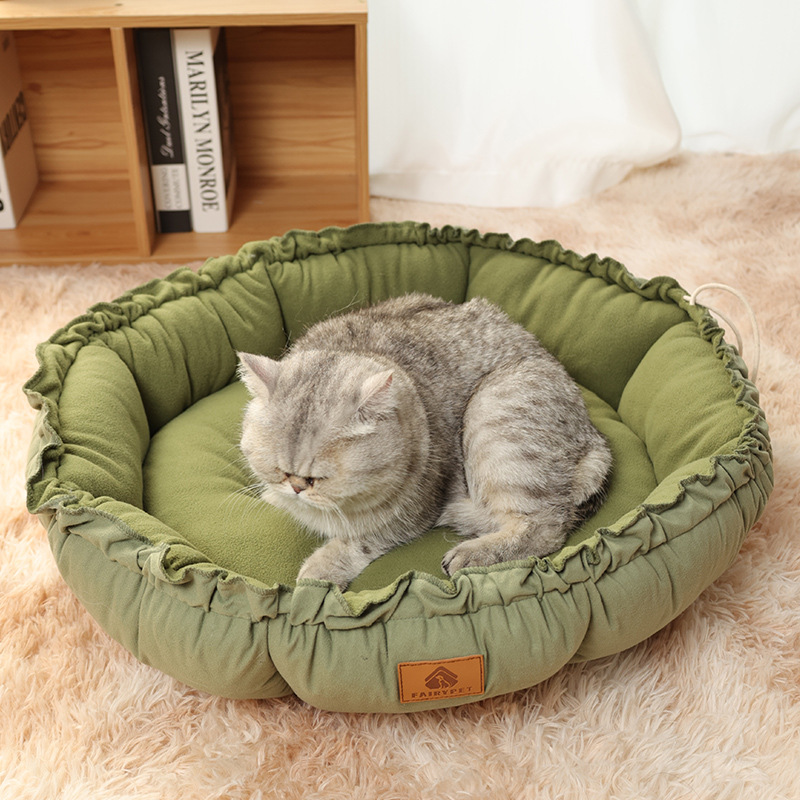
Cats are famous for sleeping on keyboards and laundry, but that does not mean they do not benefit from a bed—it means the bed you offered failed to compete. A proper bed gives a cat a defined, warm, scent-marked retreat that lowers stress and, as she ages, cushions aching joints. Our article on whether cats need beds explains the health case in detail. The instinct to claim a safe den is strong; she is simply claiming the wrong one in your home. So the bed is not pointless, it is misplaced or mistrusted. Offer a bed that matches her style—enclosed for a nervous cat, open and warm for a sun-lover—and she will use it. The goal is not to confine her to one spot but to give her a chosen refuge she returns to, which steady use of a single comfortable cat bed provides far better than a dozen rejected cushions scattered around.
Why does location matter more than the bed itself?
A cat reads a room for threats before she reads the softness of a cushion. A bed in the hallway, under the TV, or beside the fridge hums with foot traffic and noise, so she will pick the quiet sofa back instead. Cats sleep where they feel they can watch the room and escape quickly, which is why a bed tucked in a warm corner with a sightline to the door wins. If you just brought her home, our first 30 days with a rescue cat guide shows how territory builds slowly. Move the ignored bed to a sunny window ledge, a quiet bedroom corner, or beside a radiator, and watch it get used within days. The same bed in a calm spot often becomes her favourite overnight. Location is the single biggest reason a perfectly good bed goes unused, so change the spot before you change the bed.
How does scent decide whether she accepts the bed?
A new bed smells of factory and packaging, which is foreign and slightly threatening to a cat whose world is built on familiar scent. Until the bed smells like her, she treats it as an object, not a possession. You can flip that instantly by rubbing a soft cloth on her cheeks—where scent glands sit—and then on the bed, or by placing a worn t-shirt of yours inside. Her own pheromones and your familiar smell tell her brain this is safe. A well-scented bed becomes claims-worthy within a day. Avoid washing the bed immediately after she starts using it, because you would strip the scent she worked to lay down. Catnip helps some cats but is no substitute for her own facial pheromones. Scent is the quiet language of ownership, and a bed she has marked is a bed she keeps returning to through every nap.
Cat Beds For Indoor Cats Cute Cat Beds With Versatile Dual-Use Design, Reversible Donut Pet Bed For And…
Could the bed’s style be wrong for her personality?
Almost certainly, if it is ignored. Bold, confident cats often refuse enclosed caves and prefer an open, warm donut they can sprawl on; timid or rescued cats usually want the opposite—a hooded, cave-like bed where nothing can sneak up on them. A bed with high sides may overwhelm a kitten, while a flat pad may leave a senior cat feeling exposed and cold. Match the shape to the cat: nervous equals enclosed, sociable equals open, arthritic equals low-entry and padded. If the bed you bought is the wrong shape, no amount of coaxing will fix it. Consider a different bed style that fits her temperament, and keep the rejected one elsewhere as an alternative. Offering a choice of two styles in two locations lets her tell you her preference, which is far more reliable than guessing from a product photo when you shopped.
Is it about temperature and comfort, not softness?
Cats run a higher body temperature than we do and seek warmth constantly, so a bed that feels soft to you may feel cold and draughty to her. Place the bed away from drafts, on a warmed surface, or in a sunbeam, and she will choose it over a plusher but colder cushion. Orthopaedic support matters more than fluff for older cats, whose joints ache on hard or uneven surfaces. A warm, supportive bed near a heat source often outperforms a thick but chilly one. Elevation also counts: many cats prefer a bed slightly off the floor where they feel secure. Notice that she likely already has a “warm spot” she favours—the laundry pile, the sunny tile—so position the real bed there. Comfort for a cat is a calculation of heat, draft, and support, and softness is only one small part of that equation you may be overvaluing.
How long should I wait before giving up on the bed?
Give any relocated, scented bed at least a week of patient exposure before deciding it failed. Cats are creatures of habit and may walk past a new bed for days before suddenly claiming it, especially rescues still mapping their territory during the first 30 days. Drop treats on it, play near it, and let her discover it on her own terms. If after two weeks it remains untouched despite a good location and scent, it is likely the wrong style or she has bonded with an alternative spot—then switch styles rather than forcing it. A rejected bed is not a verdict on beds generally; it is feedback on that specific bed in that specific place. Keep experimenting with location and shape, and you will find the combination that turns an ignored purchase into her chosen throne, often surprisingly fast once the variables align.
Frequently asked questions
- Should I force my cat into the new bed? No—placing her there creates fear; let her choose it through scent, treats, and a good location.
- Why does she sleep on my clothes instead? Your scent comforts her; put a worn t-shirt in the bed to mimic that safe smell.
- Can a bed be too plush for an older cat? Yes—deep sides and sink-in filling can trap a stiff cat; choose low entry and firm support.
- How many beds should one cat have? Two or three in different rooms lets her pick by mood, temperature, and who is nearby.