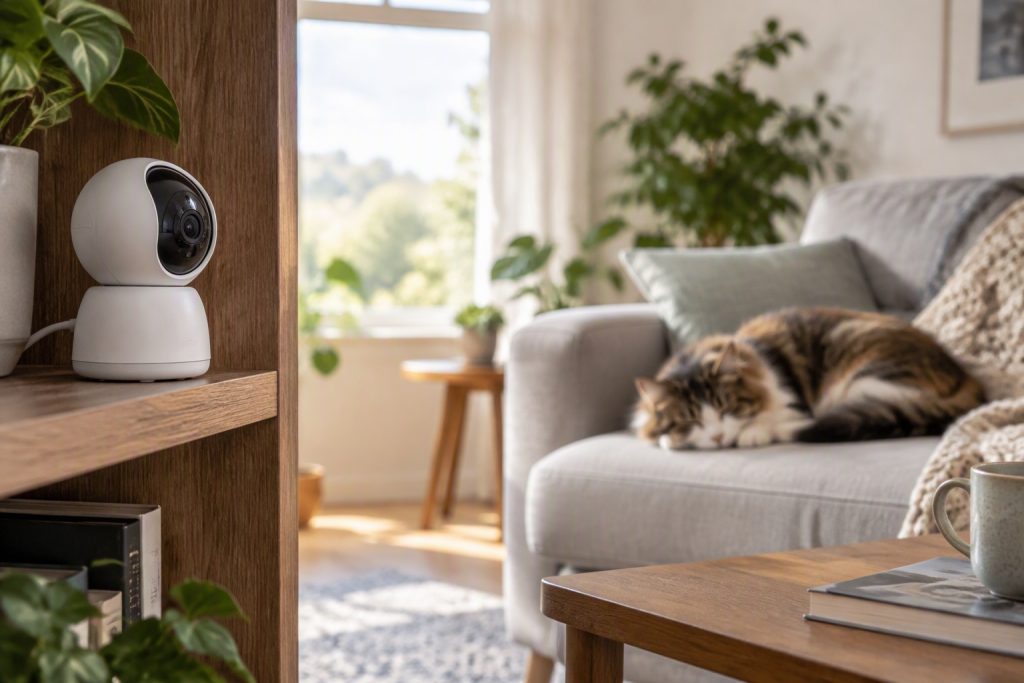
The best cat camera is one that lets you check in with clear video, hear and speak to her, and ideally dispense treats, while being easy to set up and reliable over your home Wi-Fi. A camera is genuinely useful for monitoring a cat who is home alone, watching for signs of illness, and understanding separation anxiety. Choose one with good night vision, two-way audio, and a secure, encrypted connection.
- Look for clear video and good night vision.
- Two-way audio lets you check on her.
- Treat-dispensing cameras add interaction.
- Choose a camera with secure encryption.
What is the best camera to monitor a cat?
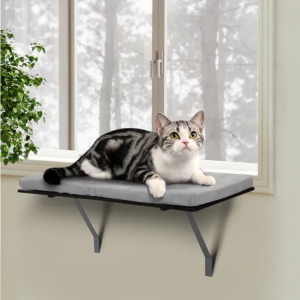
The right camera depends on what you want to do. If you simply want to see that your cat is safe while you are out, a basic indoor camera with high-definition video, night vision, and a phone app is enough. If you want to interact, look for two-way audio so you can hear her and speak to her, and motion alerts so you know when she is active. If you want to keep her engaged, a treat-dispensing camera lets you toss a treat remotely, which can be useful for a cat who is bored or anxious. For cats who roam several rooms, a pan-and-tilt camera covers more area than a fixed one. Whatever the model, check that the app is reliable, that the video is clear enough to spot changes in her behaviour, and that the camera supports encrypted connections and two-factor authentication, since a pet camera is a window into your home. Our article on the best cat window perch is another way to keep her occupied while you are out.
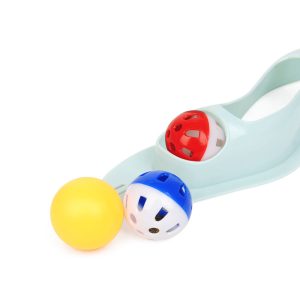
A rolling toy that rolls and moves the way a cat's prey does — movement is the whole…
Why would I want a cat camera?
A camera gives you peace of mind and useful information. If your cat is home alone while you work, you can check that she is comfortable, eating, and using her litter box, and you can see whether she is sleeping peacefully or pacing anxiously. For a cat with a medical condition, a camera can help you track how often she eats, drinks, or vomits, which is valuable information for your vet. If you are working on separation anxiety, footage shows you exactly how she behaves after you leave, which is far more useful than guessing. Cameras are also handy for monitoring a new kitten, checking on a cat who is recovering from surgery, or watching for interactions between cats in a multi-cat home. And sometimes the simple pleasure of seeing your cat napping while you are away is reason enough. Used thoughtfully, a camera helps you understand her day and respond to her needs more precisely. Our article on how much play an indoor cat needs pairs well with what you learn.
What features matter most in a cat camera?
Prioritise image quality and night vision, because you need to see clearly even in a dim room, and cats are often most active in low light. Two-way audio is valuable for both hearing your cat and reassuring her with your voice, though some cats are confused or stressed by a disembodied voice, so use it gently. Motion alerts help you know when something is happening, but look for adjustable sensitivity so you are not flooded with notifications every time she moves. A wide field of view covers more of the room, and pan-and-tilt adds flexibility. Treat dispensing is a nice bonus, especially for a bored cat. Check the storage options, whether local or cloud, and the subscription costs, because some cameras require a paid plan to save footage. Finally, security matters: choose a camera with encrypted video and two-factor authentication, and keep its firmware updated, because an unsecured camera can be accessed by others.
Can a camera help with separation anxiety?
Yes, a camera is one of the most useful tools for understanding and managing separation anxiety. By recording your cat while you are out, you can see what she actually does after you leave. Some cats settle quickly and sleep, which is normal. Others pace, cry, scratch at doors, or toilet outside the box, which indicates distress. That footage tells you whether there is a real problem and how severe it is, and it gives your vet or a behaviourist concrete evidence to work with. It also lets you test whether changes help: you can see whether a puzzle feeder, a window perch, or leaving the radio on reduces her distress. Some cameras let you speak to your cat, but be careful, because for a very anxious cat, hearing your voice without you being there can increase frustration. The camera is a diagnostic and monitoring tool, not a cure. If the footage shows real distress, the next step is a plan that builds up her tolerance to being alone, with help from a professional if needed.

Rainbow-striped plush cylinder. Keeps a bored indoor cat busy and burns off restless energy. Made from fleece and…
Is it safe to leave a camera running?
Yes, as long as you take basic security precautions. Pet cameras are internet-connected devices, and like any smart device, they can be vulnerable if not secured. Choose a camera from a reputable brand, change the default password to a strong, unique one, enable two-factor authentication, and keep the firmware up to date. Avoid cameras with known security flaws, and check the privacy settings so footage is not shared unintentionally. Be mindful of where you place the camera, since it will capture whatever is in view, including other people in your home. If you use cloud storage, read the privacy policy and understand where your footage is kept. Finally, make sure the camera and its cable are out of reach of a curious cat, since some cats chew cables or knock devices off shelves. With those precautions, a camera is a safe and useful addition to your home, and it lets you keep an eye on your cat without worry. Giving her a comfortable spot to watch the world also helps her stay occupied while you are away.
Can a camera help me spot illness in my cat?
It can, and this is one of the most valuable uses of a pet camera. Cats hide illness well and often show signs only when they think no one is watching, so footage of her day can reveal changes you would otherwise miss. You might notice that she is eating less, drinking more, vomiting, limping, or spending the day hiding, all of which are important clues. If your cat is older or has a known condition, recording her behaviour gives your vet useful information, such as how often she uses the litter box or how much she eats. It is not a substitute for a vet visit, and a camera cannot diagnose anything, but it can prompt you to seek help sooner and give your vet a clearer picture. If the footage shows anything that concerns you, such as repeated vomiting, difficulty moving, or a sudden change in routine, book an appointment and mention what you observed. Knowing her normal activity level helps you tell ordinary quiet from lethargy.
Frequently asked questions
- What is the best cat camera? One with clear video, night vision, two-way audio, and secure encryption, matched to how you want to use it.
- Can I talk to my cat through a camera? Yes, many cameras have two-way audio, but some cats find a disembodied voice confusing or stressful.
- Do I need a subscription for a pet camera? Not always. Some store footage locally, while others charge for cloud recording.
- Can a camera tell me if my cat is sick? It can reveal changes in eating, drinking, and activity, which helps you decide to see a vet sooner.
- Are pet cameras safe and private? Yes, if you use a strong password, two-factor authentication, and updated firmware.