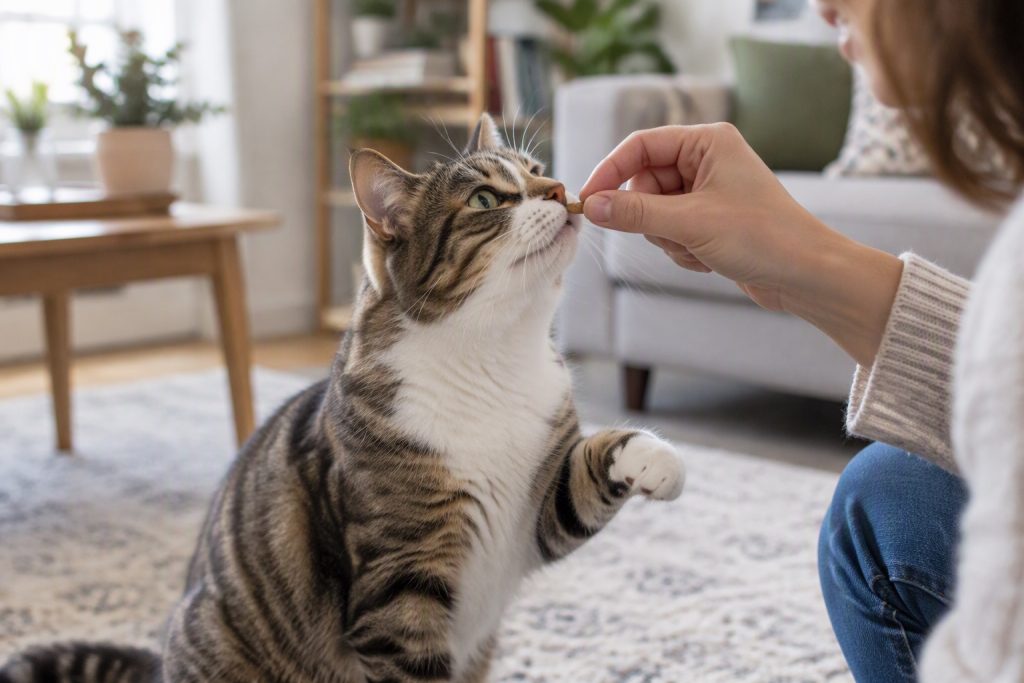
The best treats for training a cat are small, soft, and highly motivating, given in tiny pieces so they do not unbalance her diet or her weight. Soft treats work best because they can be eaten quickly, which keeps the session moving and holds her attention. Pairing the treat with a marker, such as a click or a word, makes learning faster, and keeping sessions short and ending on a success is what trains a cat effectively.
- Choose small, soft, high-value treats.
- Cut treats into tiny pieces to limit calories.
- Mark the correct behaviour, then reward.
- Keep sessions short and end on a success.
What are the best treats for training a cat?
For training, the treat needs to be something your cat genuinely loves, not just something she will eat. Soft, meat-based treats are ideal because they are quick to chew and easy to break into small pieces, so you can reward often without filling her up. Freeze-dried meat treats are another excellent option, since they are light, high in protein, and very appealing to most cats. Avoid hard, crunchy treats for training, because they take too long to eat and slow the session down. The value of the treat matters more than the brand: if your cat goes wild for it, it will work. Test a few options and see which one she will work for. You can also use tiny slivers of cooked chicken or a little wet food on a spoon as a high-value reward for difficult tasks. Whatever you choose, break it into pieces no bigger than a pea, so you can give many rewards in a short session. Our article on how many treats a cat should have helps you keep portions sensible.
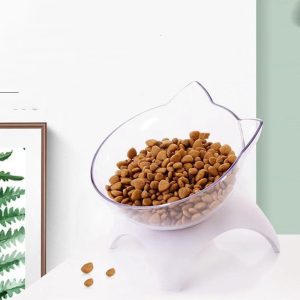
Clear glass bowl holding dry food. Made from plastic. Made for daily feeding and fresh water. Keeps food…
How many treats should I give when training?
Training can involve a lot of treats, so portion control is essential. The trick is to make each reward tiny. A single treat broken into four or five pieces gives you four or five rewards for the calorie cost of one, which is exactly what you want when you are rewarding frequently. As a general guide, treats should make up no more than about ten per cent of your cat’s daily calories, with the rest coming from a complete diet. On training days, reduce her regular food slightly to account for the extras, especially if you are working on a behaviour that takes many repetitions. If your cat is overweight or on a prescription diet, ask your vet what treats are suitable, and consider using a portion of her normal kibble as the reward instead. Watching her weight regularly tells you whether your treat habit is tipping the balance. Small and frequent beats large and rare every time.
How do I use treats to train a cat?
Cats learn best with short, positive sessions and a clear marker. Choose a quiet time and place, and pick one behaviour to work on, such as sitting, coming when called, or touching a target with her nose. The moment she does the right thing, mark it, either with a clicker or a consistent word like “yes”, then immediately give a tiny treat. The marker tells her exactly what earned the reward, which speeds up learning. Keep sessions to two or three minutes, and end while she is still engaged and successful, so she wants to come back. Repeat a few times a day rather than one long session. Never punish or force her; if she is not interested, stop and try later. Cats are not as eager to please as dogs, so patience and high-value rewards matter. If you are working on a behaviour such as not biting during play, our guide to stopping a cat biting shows how treats fit in.
Why won’t my cat take treats?
If your cat ignores treats during training, a few things may be going on. First, the treat may not be motivating enough; try something smellier or more meat-based. Second, she may not be hungry, since a cat who has just eaten will not work for food. Train before meals rather than after. Third, she may be stressed or distracted by noise, other pets, or an unfamiliar place, so move to a calm spot. Fourth, she may be feeling unwell, because a sudden loss of interest in food or treats is worth a vet check, especially if it comes with other changes. Fifth, some cats are simply not food-motivated, and for them you can use play with a wand toy, a favourite brush, or affection as the reward instead. Finally, make sure the treat is not too large or too hard to chew quickly, because a slow-eating treat breaks the flow. Experiment with the reward, the timing, and the setting, and most cats will engage.
Nail scissors, bath brush, de-shedding glove and a drying towel — the full groom in one box. Cuts…
Are store-bought or homemade treats better?
Both can work, and the best choice depends on your cat and your time. Store-bought treats have the advantage of convenience, consistent size, and a longer shelf life, and many are formulated for specific needs, such as dental health or hairball control. When buying, look for treats with a named meat as the first ingredient, minimal fillers, and no ingredients that are toxic to cats, such as onion or garlic powder. Homemade treats give you full control over what goes in, which is useful for cats with allergies or sensitivities, and you can make them as small as you like. The downside is that they need to be stored properly and used within a few days or frozen, and getting the nutrition right is harder, so they should be a supplement rather than a main food. Whichever you choose, check with your vet if your cat has a medical condition, and introduce any new treat slowly to avoid stomach upset. The best treat is one your cat loves and that fits her diet.
Can training treats make my cat fat?
They can, if you are not careful, because treats add calories on top of regular meals and many owners underestimate how much a small biscuit contributes to a small animal’s daily intake. The solution is not to stop using treats but to manage them. Break treats into tiny pieces, use them sparingly, and count them as part of her daily calories by reducing her main food slightly on training days. Choose low-calorie options where possible, such as small pieces of cooked lean meat or freeze-dried protein, and avoid treats high in fat or sugar. Weigh your cat regularly so you catch any upward drift early, and if she is gaining weight, cut back on treats first, since they are the easiest thing to adjust. For cats on a weight-loss plan, ask your vet what is safe to use as a reward, and consider using part of her measured daily ration as training rewards. With a little planning, training and a healthy weight can easily go together.
Frequently asked questions
- What treats are best for training a cat? Small, soft, meat-based or freeze-dried treats that your cat finds highly rewarding.
- How many treats is too many for a cat? Keep treats to about ten per cent of daily calories, and break each one into tiny pieces.
- Can I train a cat with food? Yes. Food rewards work well, especially paired with a clicker or a consistent marker word.
- My cat won’t take treats. What should I do? Try a tastier treat, train before meals, and use play or affection if she is not food-motivated.
- Are cat treats bad for cats? Not in moderation. Too many, or the wrong ones, can add weight or upset her stomach.