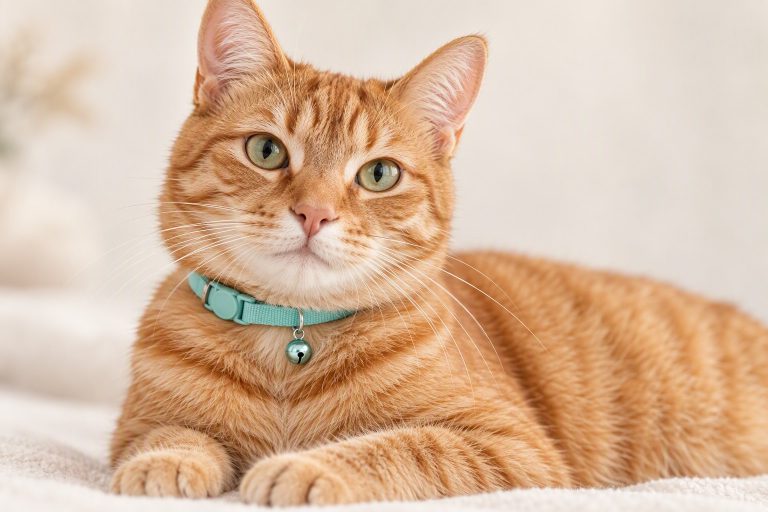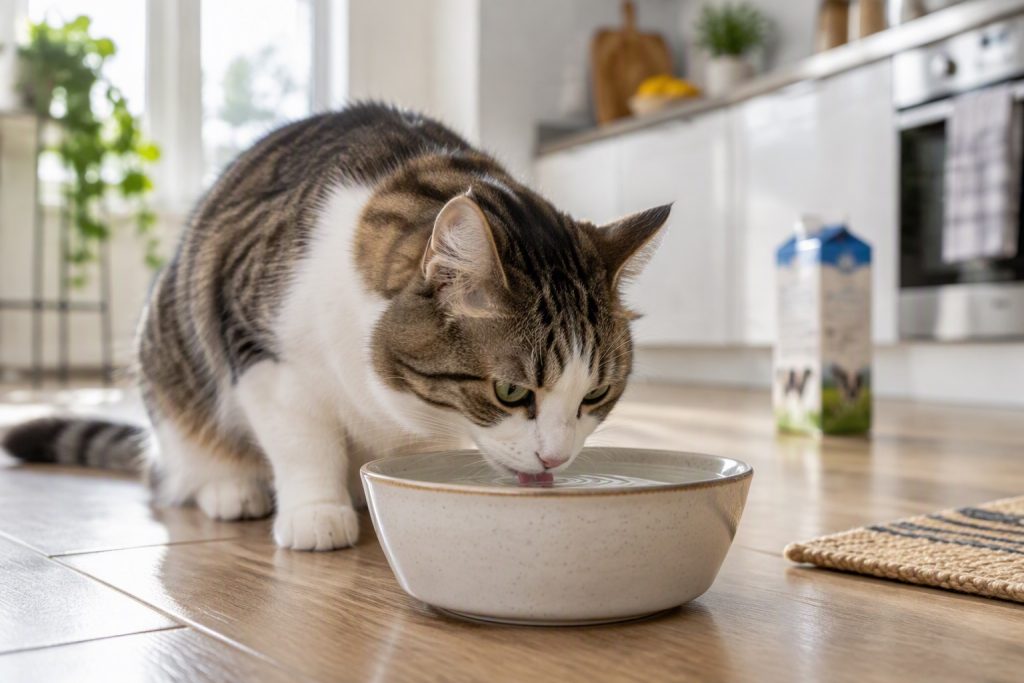
Most adult cats should not drink milk. They are lactose intolerant after weaning, so cow’s milk usually causes diarrhoea, gas, and stomach upset even when a cat enjoys the taste. A small amount of lactose-free cat milk is fine as an occasional treat, but plain water is what a cat actually needs. If your cat laps milk happily, that is taste, not tolerance. Many owners give milk for years without connecting it to the occasional upset stomach, so it is worth knowing what is actually happening.
- Most adult cats cannot digest lactose well.
- Cow’s milk often causes diarrhoea and gas.
- Lactose-free cat milk is an occasional treat only.
- Water is the drink cats actually need.
Can cats drink milk safely?
Kittens produce the enzyme lactase to digest their mother’s milk, but that ability fades after weaning, and most adult cats become lactose intolerant to some degree. That means the sugar in cow’s milk passes undigested into the gut, where bacteria ferment it and cause gas, cramping, and loose stools. Some cats show only mild signs, which is why owners often assume their cat is fine with milk, while others develop obvious diarrhoea within hours. Even when a cat tolerates a small saucer without symptoms, milk offers no nutritional benefit she needs and adds calories and fat that can contribute to weight gain. The safest answer is that milk is not a suitable drink for adult cats. If you want to give a creamy treat, choose a product made for cats and keep it small and occasional.
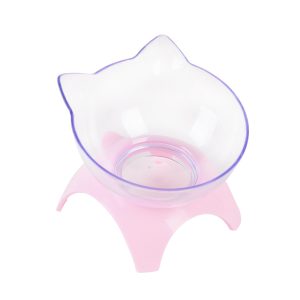
Pet drinking bowl. Part of the KiKi Meow Cat Feeding and Water collection for cats.
Why does milk give cats diarrhoea?
The problem is lactose, the natural sugar in milk. Digesting lactose requires the enzyme lactase, which breaks it into simpler sugars the body can absorb. Kittens have plenty of lactase because their survival depends on digesting mother’s milk, but production drops sharply after weaning, and in most adult cats it is low enough that a bowl of milk overwhelms the system. Undigested lactose draws water into the intestines and is fermented by gut bacteria, producing gas and loosening the stool. The result is bloating, discomfort, and diarrhoea, sometimes within a few hours and sometimes the next day. Cats cannot tell you their stomach hurts, so a cat who seems to love milk may still be uncomfortable afterwards. Because repeated digestive upset is stressful and can dehydrate a cat, it is kinder to skip milk altogether and offer water or a cat-specific treat instead. A cat with diarrhoea also loses fluids quickly, and in hot weather that can become serious faster than most owners expect.
What about kitten milk replacer or lactose-free milk?
Kitten milk replacer is a genuine necessity for orphaned kittens who have no mother, and it is formulated to meet their needs, but it is not a treat for adult cats. Lactose-free cat milk, sold as a treat, removes most of the lactose and is generally easier on the digestive system, so a small amount is usually fine for an adult cat. Even then, treat it like any other treat: a few tablespoons at most, not a bowl, and not every day, because it still carries calories and fat. Plain lactose-free cow’s milk is also lower in lactose, but it is not formulated for cats and should be given only in tiny amounts, if at all. If your cat has a sensitive stomach, kidney issues, or diabetes, check with your vet before giving any milk product. Water remains the default drink.
How much water does a cat actually need?
Cats evolved as desert hunters and have a naturally low thirst drive, which is one reason they so often run mildly dehydrated. A typical adult cat needs roughly 50 to 60 millilitres of water per kilogram of body weight per day, though much of that can come from food if she eats wet food. A cat on dry food alone may need to drink noticeably more to compensate, and many do not drink enough. Signs of dehydration include tacky gums, reduced skin elasticity, and lethargy, but they appear late, so prevention matters more than detection. Offering fresh water in several places, using a wide bowl so her whiskers do not touch the sides, and adding wet food to her diet all help. Our guide to a cat not drinking enough water walks through practical ways to raise her intake.
Removable And Washable Multi-purpose Cat Bowl. Part of the KiKi Meow Cat Feeding and Water collection for cats.
What should a cat drink instead of milk?
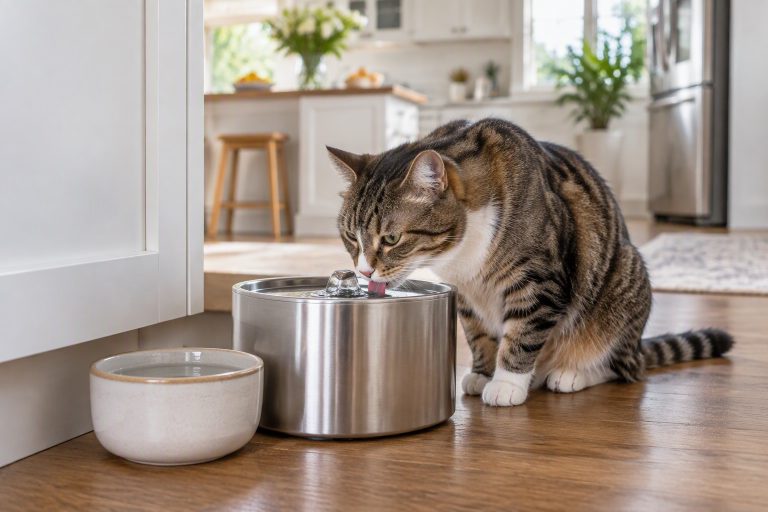
Fresh, clean water is the answer for almost every cat. Offer it in a ceramic or stainless steel bowl, refill it at least daily, and place bowls away from the litter box and food if she seems fussy, since many cats prefer their water separate from their dinner. Some cats drink more from a running source, so a pet fountain can help, and others prefer several small bowls around the house. If you feed dry food, consider adding some wet food, which is about 70 to 80 percent water and is an easy way to raise her overall intake. Our guide to wet versus dry cat food explains how the two compare for hydration and nutrition. Avoid giving her sugary drinks, alcohol, or anything containing caffeine, all of which are unsafe. If she ignores water entirely, that is a vet matter, not something to solve with milk. Cats are also notoriously fussy about bowl material and location, so a simple change can sometimes increase how much she drinks.
When should I worry about my cat’s drinking?
Worry if her drinking changes sharply in either direction. Drinking much more than usual can signal diabetes, kidney disease, or hyperthyroidism, especially if it comes with increased urination, weight loss, or a bigger appetite. Drinking very little, or refusing water, is also serious and can lead to dehydration quickly, particularly in hot weather or during illness. Watch for other signs such as dry gums, sunken eyes, lethargy, or not producing urine. Any sudden change in thirst deserves a vet visit, because these conditions are far easier to manage when caught early. Keep an eye on how much she drinks by measuring what you refill, since owners often underestimate how much a cat consumes. If you are ever unsure, a quick call to your vet is the safest step, and it costs far less than treating an advanced illness.
Frequently asked questions
- Can cats drink milk without getting sick? Some tolerate a little without obvious signs, but most are lactose intolerant. Even a tolerant cat gains nothing from milk.
- Is lactose-free milk safe for cats? In small amounts, yes. Treat it as an occasional treat, not a daily drink, and check with your vet if she has health conditions.
- Why does my cat love milk if it is bad for her? Cats like the fat and taste, but enjoyment does not mean she can digest it. Watch for diarrhoea in the hours afterwards.
- Can kittens drink cow’s milk? No. Orphaned kittens need a proper kitten milk replacer, and cow’s milk can cause serious digestive problems in young cats.
- How do I get my cat to drink more water? Offer fresh water in several spots, try a fountain, use wide bowls, and add wet food to her diet to raise her overall intake.