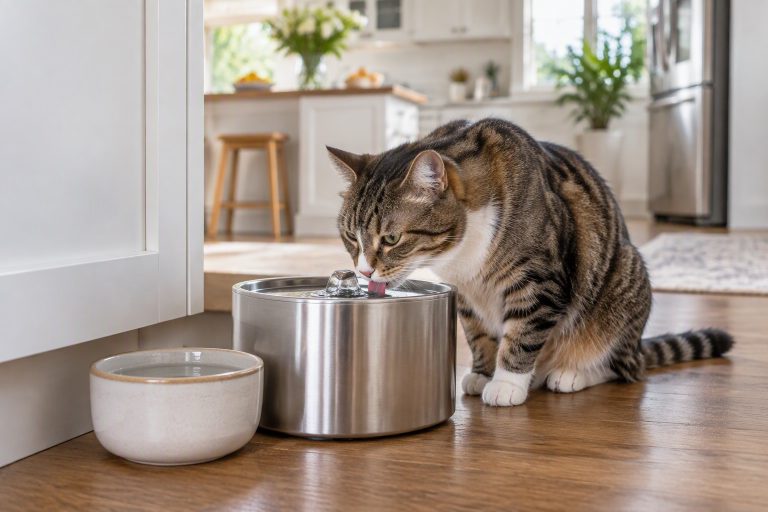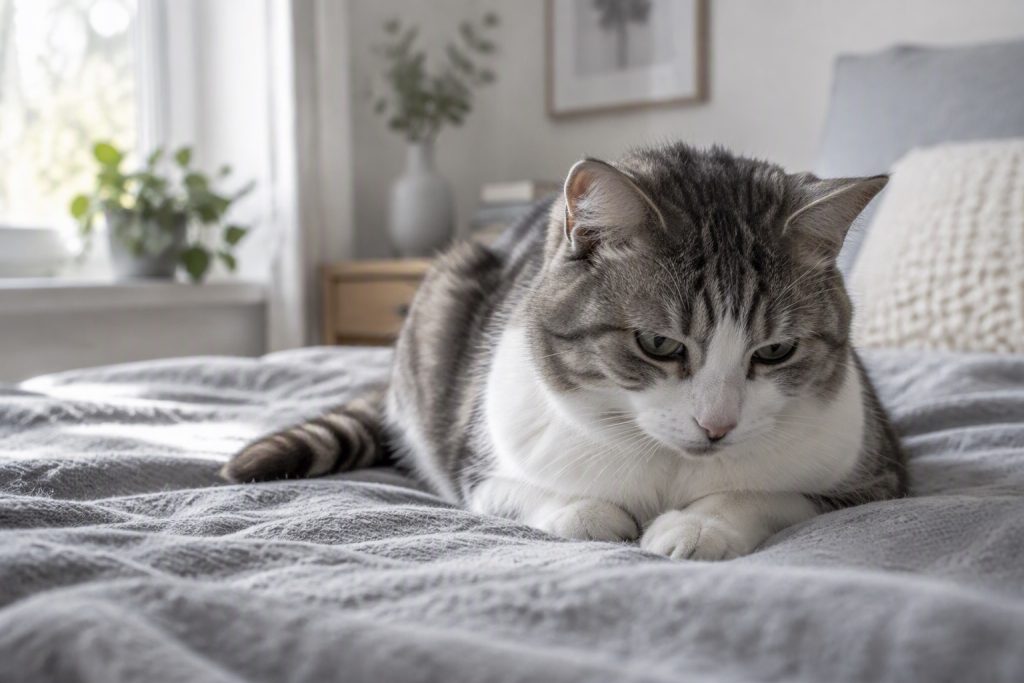
Cats hide pain because showing weakness is a survival instinct, so the signs are usually behavioural rather than obvious. Watch for changes in how she moves, grooms, eats, and uses the litter box, plus a quieter or crankier mood. Any cat who stops jumping, hides more, or flinches when touched should be assessed by a vet, because pain in cats is common and easy to miss until it is advanced. You know your cat better than anyone, so trust your instinct when something feels off, even if you cannot name it.
- Subtle behaviour change is the main clue.
- Watch jumping, grooming, eating, and litter habits.
- Posture and gait changes often mean pain.
- When in doubt, book a vet visit.
What are the early subtle signs a cat is in pain?
Early pain is quiet. A cat may simply become less interested in play, spend more time in one spot, or stop greeting you at the door. She might sit hunched with her head lowered, or tuck her front paws under her chest in a position owners describe as a meatloaf, but held stiffly rather than relaxed. Other early clues include a reduced appetite, drinking less or more, sleeping more, and avoiding being picked up. She may groom one area obsessively or stop grooming altogether, letting her coat look dull and greasy. Some cats become clingy, following you and vocalising, while others withdraw and hide. None of these signs is proof on its own, but a cluster of them appearing together over days is a strong signal that something hurts and deserves a professional look rather than watchful waiting.

Cervical pillow, plush hammock, floor mat and paw cushion — four places to nap.
How does a cat’s posture or walk change with pain?
Movement tells you a lot. A cat with sore joints often walks stiffly, takes shorter steps, and hesitates before jumping onto a favourite surface or climbing stairs. She may jump down in one ungraceful movement rather than in stages, or stop jumping altogether and ask to be lifted. A hunched back, tucked abdomen, and lowered head are classic pain postures, and a cat with abdominal pain may sit with her elbows out and belly guarded. Limping that comes and goes can point to arthritis or a soft-tissue injury. Watch her tail too — a tail held low and still, rather than moving freely, often accompanies discomfort. Film a short video of her walking and jumping on a good day, so you can compare later and show your vet exactly what you mean. Cats are masters at disguising a limp when they know they are watched, so footage taken from a distance often reveals more than a live examination at home.
How do I tell dental pain from other problems?
Dental pain has a distinctive pattern. A cat with a sore mouth may drop food while eating, chew on one side, or prefer soft food over kibble. She might paw at her face, drool, or refuse to eat entirely, and her breath may smell noticeably bad. She could also flinch when you touch near her cheeks or chin. Sometimes the only sign is that she stops eating hard treats or grooms her face less. Dental disease is one of the most common painful conditions in cats, and it is easy to underestimate because cats keep eating long after a tooth hurts. Lift her lip gently and look for red gums, tartar, or a broken tooth, but do not press on anything sore. If her eating habits change at all, have her mouth checked, because dental pain rarely resolves on its own. Cats are also prone to tooth resorption, a painful condition where the tooth is gradually broken down, and it can be present even when the tooth looks intact from the outside.
What behaviour changes suggest chronic pain?
Long-term pain, especially from arthritis, changes a cat’s daily life in ways owners often mistake for ageing. She may stop using the litter box because stepping in and squatting hurts, and instead toilet just outside it. She might sleep in a new, lower spot, avoid being stroked along the back, or hiss when picked up. Grooming can suffer, leaving her coat matted or scruffy, or become obsessive over one sore area. She may be irritable with other pets, or withdraw from family life and spend hours alone. These changes creep in so gradually that owners adapt without noticing, which is why it helps to keep a soft, supportive bed and easy access to food and water in reach. Our guide to whether cats need beds explains how the right resting spot reduces strain on sore joints.

Cat Mattress Flower Cat Sofa Bed Cute And Comfortable Cat Nest Cushion Thickened Non Slip Three Dimensional Pet…
How can I check for pain at home safely?
You can gather clues without causing harm. Sit quietly and watch her at rest for a few minutes, noting her posture, breathing, and whether she shifts position comfortably. Offer a favourite toy and see if she plays as usual, and watch her walk across the room and jump onto something low. Gently stroke her from head to tail and notice any flinch, twitch, or growl, but never press on a sore limb or belly to test it. Check her litter box habits and appetite over a few days, because changes there matter. Do not give any human painkiller, since common drugs like ibuprofen and paracetamol are highly toxic to cats. If she shows several signs, or if she is hiding and refusing food, treat that as urgent and contact your vet rather than waiting to see if she improves. Keeping a simple daily note of what she eats, drinks, and does makes patterns visible, and patterns are what vets need to work with.
When should I stop guessing and call the vet?
Call your vet when signs last more than a day or two, when they are getting worse, or when your cat stops eating, drinking, or using the litter box. Sudden crying, a swollen or bleeding limb, a distended belly, or a cat who cannot settle at all are emergencies, and so is any cat who cannot urinate. Pain that appears after a fall or a fight always warrants a visit. If you have recently brought her home, our guide to the first 30 days with a rescue cat explains why a check-up early on is worth planning, since a rescue may arrive with untreated pain. Write down what you have seen and when it started, and bring your video. Clear observations help your vet find the cause faster, and pain is far easier to manage when it is caught early. There is no benefit to waiting a week to see whether she improves, because most painful conditions in cats do not simply fade, and the sooner treatment starts the more comfortable she will be.
Frequently asked questions
- Do cats purr when in pain? They can. Purring is not always contentment, and some cats purr to self-soothe when unwell, so judge it alongside other signs.
- Why does my cat hide when she is hurting? Hiding is a natural instinct that protects a vulnerable animal. A cat who suddenly hides more should be checked by a vet.
- Can I give my cat human painkillers? No. Many common human painkillers are toxic to cats. Only give medication prescribed by your vet.
- How do vets assess pain in cats? They combine your history with a physical exam, and may use imaging or blood tests to find the cause before treating.
- Is slowing down always just old age? Not always. Arthritis is common and treatable, so stiffness or reduced jumping deserves an assessment rather than being accepted as normal ageing. Many older cats move far more comfortably once their pain is managed.