The worst places for a litter box are anywhere noisy, high-traffic, near food or water, or hard for your cat to reach—laundry rooms with sudden machines, tight closets, and spots next to her bowls top the list. Put the box somewhere quiet, private, easy to access at all hours, and away from where she eats.
- Avoid loud, busy spots like the laundry room where machines startle a cat mid-use.
- Never place the box beside food or water; cats refuse to toilet near where they eat.
- Keep it reachable at all hours, including for seniors who cannot dash across the flat.
- Skip tight closets with closing doors; a trapped cat may stop using the box entirely.
Why does location matter so much for litter boxes?
Cats are fastidious and vulnerable while toileting, so they seek a spot that feels safe, quiet, and scent-separate from their food—instincts inherited from wild ancestors who avoided contaminating their kill. A box in the wrong place triggers avoidance, and avoidance becomes a house-soiling habit that is maddening to break. This is why our guide on how many boxes for two cats stresses spreading them across safe zones. A well-placed litter box is used reliably; a poorly placed one is the most common cause of vet-visit behaviour complaints. The cat is not being spiteful when she pees elsewhere—she is telling you the bathroom you provided feels threatening or inconvenient. Respect her need for a calm, private, accessible toilet and most elimination problems simply vanish without training, medicine, or stress for either of you in the household.
Where should you NOT put a litter box?
Concretely, avoid the laundry room where washers lurch and buzz, the kitchen beside the food bowls, a bathroom with a closing door she can be locked out of, and any far corner she must pass a dog or small child to reach. A box behind a permanently closed door is a box she will abandon the moment she is trapped once. Another mistake is the box with sides too high tucked into a cramped spot where an arthritic cat cannot turn around. A proper setup beats a pretty hidden corner. Also skip high-traffic hallways and entries where guests stream past. The rule of thumb: if you would not want to use a toilet in that spot, neither does she. Quiet, low-traffic, and always accessible trumps out-of-sight every single time when you are deciding where the box lives in your home.
Does covered versus open change placement?
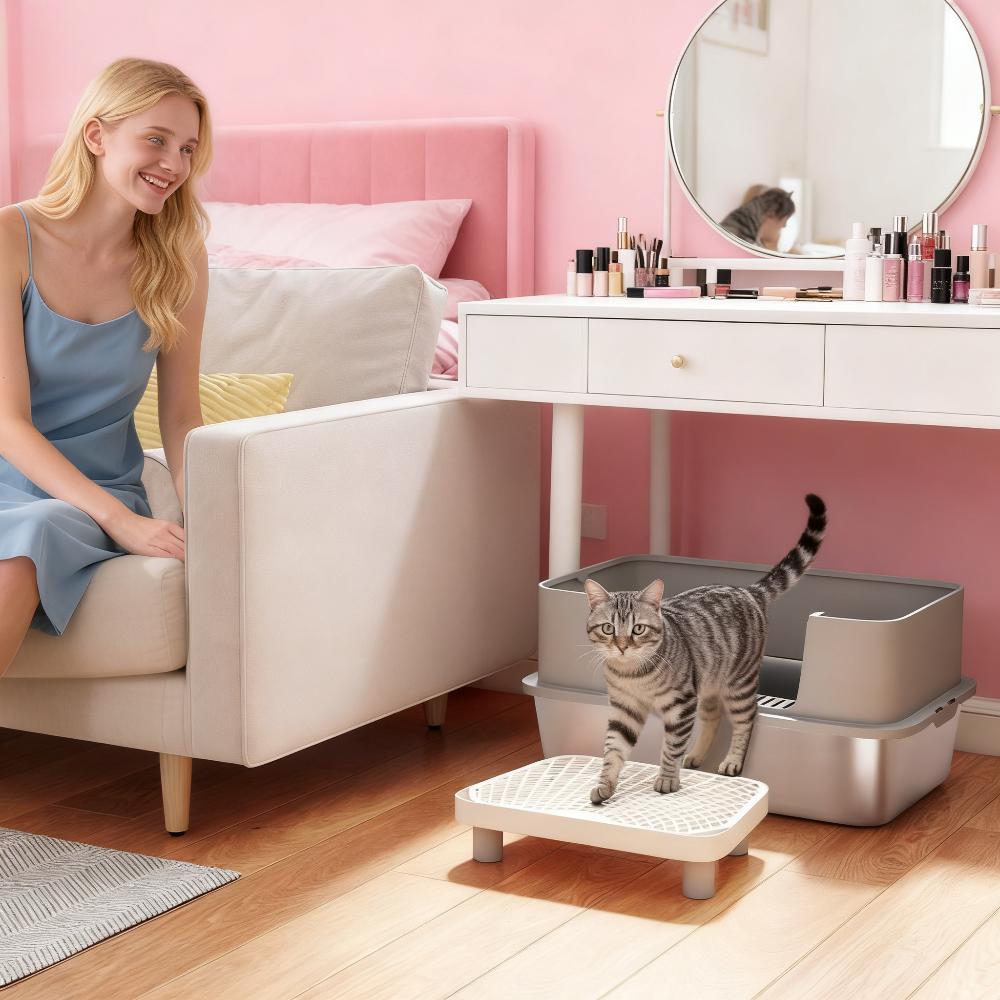
It does, because a covered box traps odour and feels like a dead-end ambush spot to a nervous cat, so it must sit in a well-ventilated, open area where she can see approaches. An open box offers more visibility and airflow but sprays litter, so it needs a low-traffic corner. Our covered versus open comparison helps you choose the style, but whichever you pick, placement stays paramount. A high-sided open box can solve spillage without the claustrophobia of a full hood. A quality litter box placed with a clear sightline and an escape route will be used; the same box jammed in a dark alcove will be shunned. If you love the tidy look of a cover, compensate with extra ventilation and a location she can enter and exit without feeling cornered, because feeling trapped is what makes covered boxes fail for many cats.
How many boxes and where, for a small home?
The standard rule is one box per cat plus one extra, and in a small flat that means distributing them so no cat must cross another’s territory to toilet. For two cats that is three boxes in three different quiet locations—perhaps a bedroom, a bathroom, and a living-room corner—rather than three stacked in one spot. Our two-cat box guide explains the maths. A multi-box strategy prevents the guarding that makes one cat block another from the only toilet. Spread them across floors if you have levels, because a cat caught short upstairs will not dash down to a single box. Even in a studio, place boxes at opposite ends so each feels private. The number only helps if the locations are genuinely separate and safe, so plan the map of your home around her routines, not around where the boxes happen to fit most neatly into your furniture arrangement.
How do I transition a box to a new spot?
Cats object to sudden changes, so move the box gradually—shift it just a foot or two a day toward the better location rather than relocating it across the room in one jump. If a fast move is unavoidable, keep a second box in the old spot for a week so she has a bridge. A familiar-smelling box eases the transition, so scoop the new location with the same litter and avoid scrubbing away all scent at once. If she starts toileting by the old spot, you moved too fast; step back halfway. Our box style notes also apply if you are switching covered to open during the move. Patience prevents a regression that could become a permanent habit. The aim is for her to discover the new, better location as a gentle improvement, not a confusing disappearance of her bathroom, which is what triggers the anxiety-driven accidents owners dread most.
What if my cat still avoids the new location?
If she toilets elsewhere despite a sensible spot, the problem is likely the box itself or a medical issue, not the room. Rule out pain first—urinary infections make cats associate the box with discomfort and seek soft surfaces. Then check the box: too small, too dirty, wrong litter, or a cover she hates. A box with uncomfortable high sides can deter a senior. A fresh, appropriately sized litter box in the quiet spot usually resolves it once health is cleared. Scoop daily and wash weekly, because a cat with options will simply refuse a foul box and pick your rug. Keep the location consistent after she accepts it, because cats rely on predictability. If all else fails, temporarily add a box exactly where she is already going, then slowly migrate it to your preferred safe location using the gradual step method described above, letting her lead.
Frequently asked questions
- Can I put the litter box in the bathroom? Yes if the door stays open and it is quiet, but avoid it if guests close the door.
- Should the box be near her food? No—cats instinctively separate toilet and dining areas, so keep them in different rooms.
- Is the laundry room a bad idea? Usually yes; the noise startles cats mid-use and they learn to avoid it.
- How far apart should multiple boxes be? As far as practical—different rooms beat corners of the same room for territorial cats.