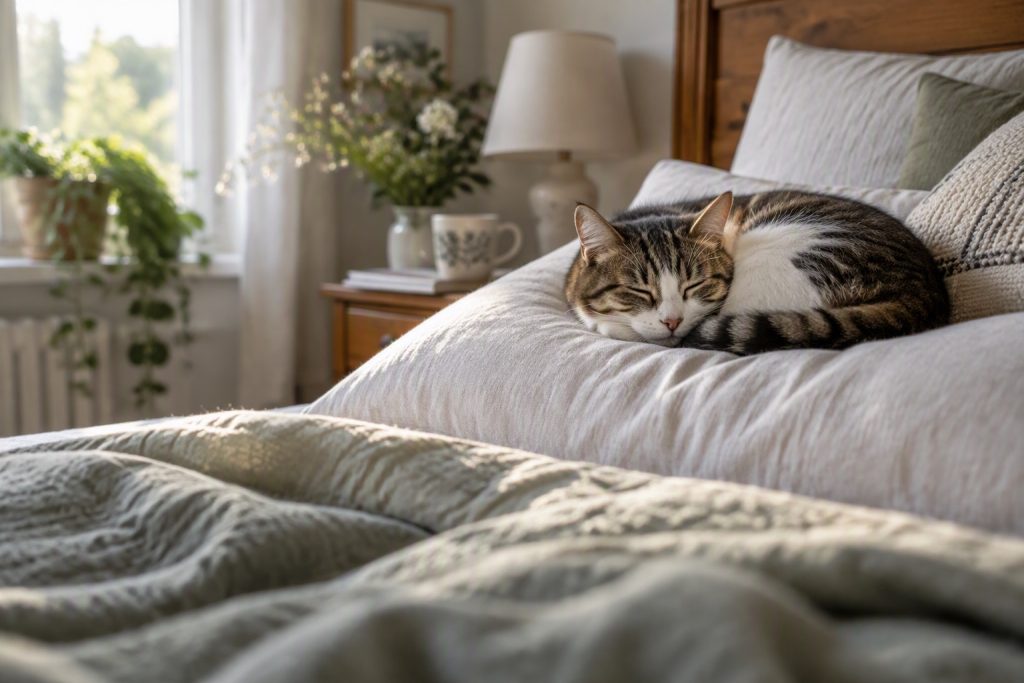
Cats sleep on your head for warmth, safety, and closeness. Your head is the warmest part of the bed, it is high enough to feel secure, and it keeps her near the person she trusts most. It is usually a sign of affection rather than a problem, though it can disturb your sleep. If it bothers you, you can redirect her gently without rejecting her. The habit is easy to shape once you understand what she is getting from it.
- Your head is the warmest spot on the bed.
- Height and your scent feel safe to her.
- It usually signals trust and closeness.
- Redirect gently; never push her away harshly.
Why does my cat sleep on my head?
The simplest reason is heat. Your head radiates warmth, and cats seek out warm spots to conserve energy, especially at night when the room cools. The second reason is security. Your head is high relative to the rest of the bed, and cats feel safer when they can rest above the action and watch for anything approaching. The third is you. Your scent, your breathing, and the sound of your heartbeat are familiar and comforting, and sleeping against you is the closest a cat gets to the safety of a kitten pile. Some cats also choose the head because it is the one part of you that does not move much during the night, making it a stable, warm perch. So the behaviour is a blend of practical comfort and genuine attachment, not a strange quirk.

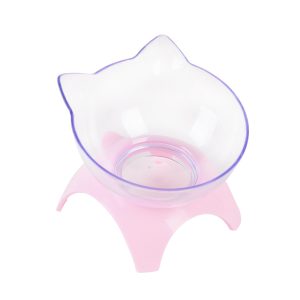
Cervical pillow, plush hammock, floor mat and paw cushion — four places to nap.
Is sleeping on my head a sign of affection?
It usually is. Cats are selective about where they sleep, and choosing to rest against you rather than alone shows trust. A cat who sleeps on your head is comfortable being close, vulnerable, and relaxed in your presence, which is a meaningful compliment from an animal that is hardwired to stay alert. That said, it is not purely sentimental: warmth and security are real motivations too, and a cat may simply have found that your head is the best spot in the house. Either way, the behaviour reflects a strong bond, and it is not something to discourage out of worry that it means she is anxious. If she is otherwise relaxed and healthy, sleeping on your head is a normal, affectionate habit, and many owners come to find it endearing.
Why does my cat pick my head and not the foot of the bed?
Several things make your head more appealing than your feet. Heat rises, so the area around your head and pillow is often warmer than the lower end of the bed, particularly if you use a thick duvet. Your face and breath are a source of familiar scent and sound, which is reassuring, whereas feet move, twitch, and sometimes kick. Height matters too, since a cat on your pillow can see more of the room and feels less exposed than one down at the foot. Some cats also prefer the head because it is near the pillow, which is soft and moulds around them. In households with more than one cat, the head spot may simply be the most contested prime real estate, and the boldest cat claims it. Individual preference plays a big role, and there is no single explanation that fits every cat.
Is it bad for my cat or for me?
For your cat, it is generally harmless and often beneficial, since close contact lowers stress and strengthens your bond. The main risk is practical: a cat on your face can obstruct your breathing or disturb your sleep, and if you have allergies or asthma, sleeping beside her may worsen symptoms. For you, the bigger issue is sleep quality. Waking repeatedly because a cat is kneading your scalp or settling on your chest can leave you tired, and poor sleep is a real health concern. There is also a small risk of being scratched if she startles. None of this means you must evict her, but it is fair to protect your own rest. If you are a light sleeper or have respiratory problems, giving her a comfortable alternative nearby, as covered in our guide to whether cats need beds, lets you both sleep well. A little planning at bedtime protects your rest without hurting her feelings, and most cats adapt within a week or two.
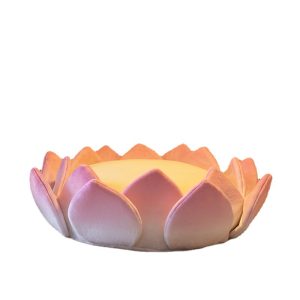
Cat Mattress Flower Cat Sofa Bed Cute And Comfortable Cat Nest Cushion Thickened Non Slip Three Dimensional Pet…
How do I get her to sleep somewhere else?
Redirect rather than reject. Set up a warm, appealing bed right beside your pillow, and place it where she can still be close to you. A bed that holds heat, such as one with a soft fleece lining or a self-warming layer, is more tempting than a cold mat. Encourage her onto it with treats and praise at bedtime, and if she climbs onto your head, gently place her on the bed instead, without scolding. Consistency is key, because a cat who is sometimes allowed on your head and sometimes moved will keep trying. You can also raise your own pillow area or use a firmer pillow to make your head less appealing, and keep the room cool so she seeks the bed rather than you. If she ignores the new bed, our guide to why your cat ignores her bed explains the common reasons and fixes.
When should I worry about her sleep habits?
Sleeping on your head is not itself a concern, but a sudden change in sleeping patterns can be. Worry if a cat who always slept beside you starts sleeping alone and hiding, or if she becomes restless, paces at night, or vocalises more than usual, since these can signal pain, stress, or a health problem such as hyperthyroidism. Increased sleep, especially in an older cat, can also point to illness. Watch for other signs like appetite changes, weight loss, or reduced grooming. If her sleep shifts suddenly and comes with any of these, see your vet. Otherwise, enjoy the closeness. A cat who wants to sleep on your head is telling you she feels safe, and that is a bond worth keeping, even if you occasionally wake up with a paw in your ear.
Frequently asked questions
- Is it safe to sleep with my cat on my head? Usually yes. The main risks are disturbed sleep and, rarely, breathing obstruction or a scratch if she startles.
- Why does my cat sleep on my head and not my partner’s? She may prefer your warmth, your scent, or the stability of your position. It often reflects which person she feels closest to.
- Does sleeping on my head mean my cat is anxious? Not usually. It more often signals comfort and trust, though a sudden change in habits is worth checking.
- How do I stop her sleeping on my head without upsetting her? Offer a warm bed beside your pillow, redirect her gently at bedtime, and be consistent. Never push her away roughly.
- My cat sleeps on my head and kneads. Why? Kneading is a comfort behaviour, and doing it on you shows she feels safe. A soft blanket on your lap or pillow can spare your scalp.