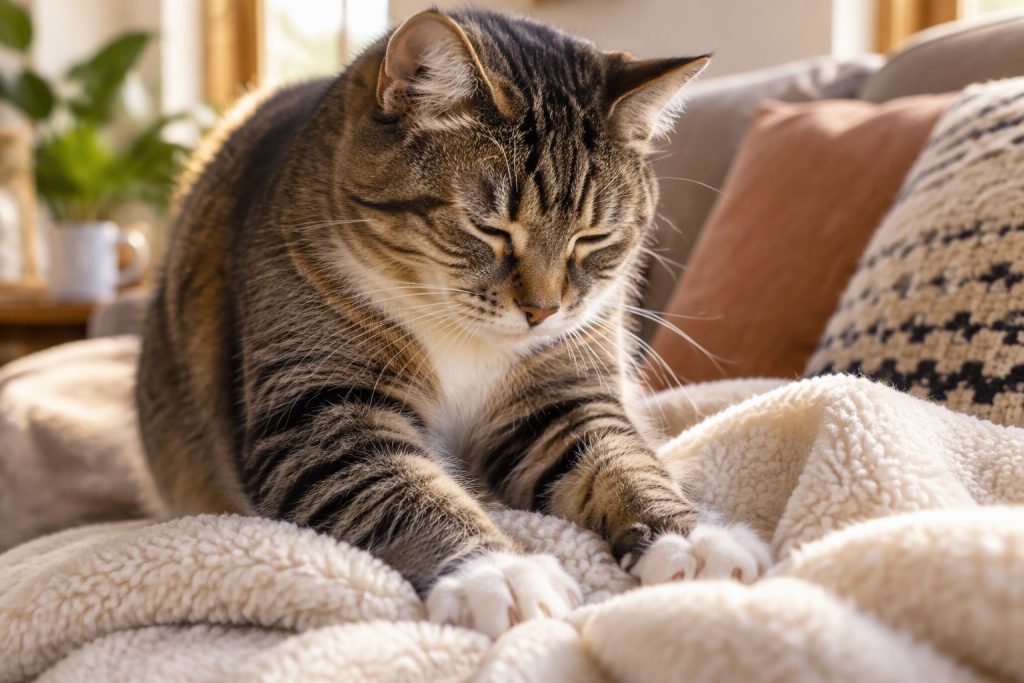
Cats knead because it is an instinct carried over from kittenhood, when they pressed their paws against their mother to stimulate milk flow. As adults, the same motion often signals comfort and safety, and it can also be a way of marking you with scent from glands in the paw pads. So kneading usually means she feels relaxed and bonded with you, even if it is a little prickly on your lap. It is one of the oldest and most instinctive things a cat does, and it rarely signals a problem.
- Kneading is a leftover kitten nursing instinct.
- It usually signals comfort and security.
- Paw pads leave your scent, marking you as hers.
- It is normal; trim nails to make it gentler.
Why does my cat knead me with her paws?
The behaviour starts in the first days of life. A newborn kitten presses her front paws against her mother’s belly to help milk flow, and that rhythm becomes linked in her brain to warmth, food, and safety. When an adult cat kneads you, she is reaching back to that feeling of complete security, which is why she often does it when she is sleepy, relaxed, or being stroked. The motion is sometimes called making biscuits because the alternating push looks like kneading dough. Cats also have scent glands between their paw pads, so each press deposits a little of her personal scent on you, claiming you as part of her safe territory. It is a compliment, not a demand, and it is one of the clearest signs that a cat trusts the person she is kneading. Some cats knead only one special person, while others knead any available lap, and both are normal.
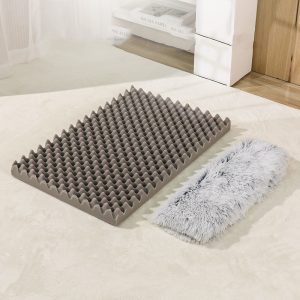
Long Pile Square Pet Mat Cat House For Bed For Mat Detachable Non-slip Bottom Deep Sleep Sofa Winter…
Is kneading always a sign of affection?
Mostly, yes, but context matters. A cat kneading while purring softly on your lap, with relaxed ears and half-closed eyes, is content. The same motion with a tense body, flattened ears, or a flicking tail can mean overstimulation, and she may be preparing to nip. Some cats knead as a self-soothing habit when they are anxious, much like a child sucking a thumb. Watch her whole body rather than just her paws. If she is kneading hard on your leg while staring at you with wide pupils and a stiff posture, she may be asking for space. The kindest response is to read the rest of her signals, offer a soft blanket to knead instead, and let her choose whether to stay close or move away. Respecting that choice keeps her comfortable and keeps the behaviour positive.
Why does my cat knead and drool?
Kneading with drooling is a strong sign of deep contentment in many cats, because the nursing memory includes the sensation of milk and the relaxed jaw that goes with it. A cat who kneads and drools on a soft blanket is often reliving a very early, very safe feeling. It is usually harmless, though it can be messy. Rarely, drooling can point to nausea, dental pain, or a mouth problem, so if it is new, excessive, or comes with bad breath, difficulty eating, or weight loss, have her checked. If she has always drooled when happy and is otherwise well, there is nothing to fix. Keep a soft throw on the sofa for her, and enjoy the fact that she feels that safe with you. If you would rather not be dampened, a folded towel between her and your lap does the job without interrupting the moment.
Why does my cat knead blankets or soft things?
Soft, plush surfaces mimic the mother’s fur, so blankets, fleece, and your jumper are prime kneading targets. The texture triggers the same comforting association, and many cats will knead a favourite blanket before settling down to sleep. This is often part of a bedtime routine, a way of making the spot comfortable before she curls up. It can also be a nesting behaviour, especially in females, and some cats knead and even carry soft items around. Providing a dedicated soft bed or blanket gives her somewhere appropriate to do it, which saves your clothing from pulled threads. Our guide to whether cats need beds explains how a good bed supports these settling rituals, and if she is older, our look at the best bed for an older cat covers how to keep joints comfortable while she kneads.
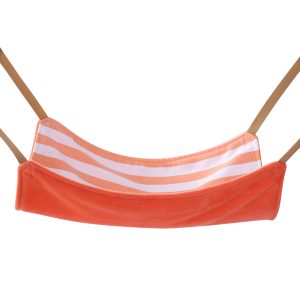
Cervical pillow, plush hammock, floor mat and paw cushion — four places to nap.
Does kneading mean anything about her mood or health?
Kneading is generally a healthy behaviour and a good sign that your cat feels at ease. A sudden increase can sometimes accompany a stressful change, such as a move or a new pet, as she seeks comfort. A sudden decrease in a cat who used to knead happily may be worth noting if it comes with other changes like hiding, less grooming, or reduced appetite. Occasional kneading of a sore area could also be a cat comforting a painful spot, so watch for any pattern. In most cases, though, kneading is simply a contented cat doing something deeply ingrained. If her overall behaviour is normal, there is nothing to worry about, and you can enjoy the ritual without reading too much into it. Sudden changes in any long-standing habit are always worth a vet visit if they persist.
How can I make kneading more comfortable?
Kneading can hurt because cats push with their claws partly extended, so a thick blanket or a folded throw on your lap gives you a buffer. Keeping her front nails trimmed and blunt reduces the prickle without stopping the behaviour, and a scratching post helps keep them in good condition. If she kneads your chest or throat, gently redirect her to a soft pillow beside you rather than pushing her away, which can feel like rejection. A cosy bed or a fleece mat in her favourite spot gives her somewhere to knead and settle without you. Never punish the behaviour, since it is a sign of trust, and punishing it can damage your bond. Set yourself up comfortably, and let her enjoy her biscuits. A dedicated soft mat or bed beside you gives her a place to knead that is all her own, which often becomes her favourite spot to settle.
Frequently asked questions
- Why does my cat knead me but not my partner? She may simply feel safest with you, or your lap may be warmer and softer. It usually reflects a strong bond.
- Should I stop my cat from kneading? No. It is a natural, comforting behaviour. Redirect her to a blanket or pillow if her claws hurt, but do not punish her.
- Do male cats knead? Yes. Kneading is not limited by sex, and both male and female cats do it, often when relaxed.
- Why does she knead and then bite? That is usually overstimulation. End the petting, let her settle, and give her space rather than continuing to stroke.
- Is kneading ever a problem? Only if it becomes compulsive, damages her skin, or appears alongside other signs of illness or stress. Otherwise it is normal and healthy, and it often deepens as your bond grows.