

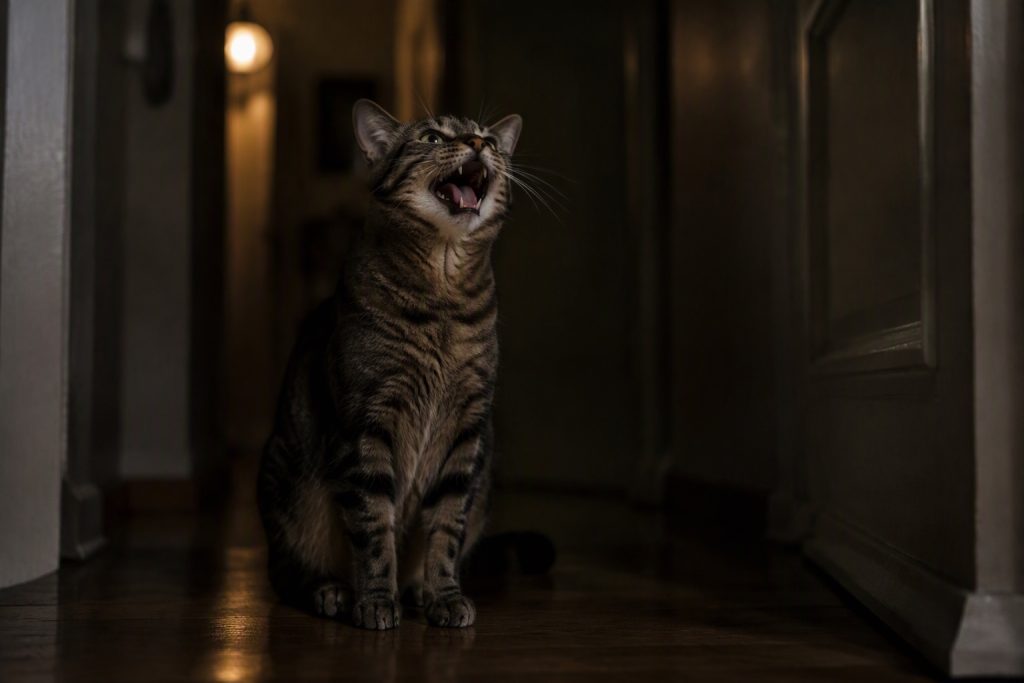
A cat that calls through the night is not being difficult, and the noise is usually a symptom rather than a habit. Some cats vocalise because they are hungry, bored or seeking company, but in older cats especially, night calling is frequently the first sign of something physical. The pattern matters: a young cat that shouts for food at five in the morning is a routine question, while a senior cat that wanders and yowls at two is a medical one. Separating those two cases is the first job, because they need completely different responses and different amounts of urgency.
- Night vocalising has both behavioural and medical causes, and the cat’s age is the main clue.
- In older cats, night calling is often linked to pain, high blood pressure, thyroid problems or cognitive change.
- For a young cat, an evening play session followed by a meal is the most effective change.
- Do not ignore new night calling in a senior cat; book a vet appointment.
Why does my cat meow at night?
The reasons divide neatly by age. A young, healthy cat that calls at night is usually expressing an unmet need: hunger, boredom, a closed door, or simply the natural activity peak at dusk and dawn. Cats are crepuscular, so waking and calling in the small hours is not strange behaviour, and a cat that has learned that calling brings a human downstairs has a strong incentive to keep doing it. An older cat is a different case. Night calling that is new in a senior cat is commonly linked to pain, high blood pressure, an overactive thyroid or age-related cognitive change, and it is often accompanied by wandering, staring or restlessness. The age of the cat should therefore be the first thing you consider.

This rolling toy rolls and moves the way a cat's prey does — movement is the whole point.…
How do I tell whether night vocalising is medical?
Look for what comes with it. Behavioural night calling is usually directed at you and stops when the need is met: the cat calls, you get up or feed it, and the cat settles. Medical night calling tends to be less directed and more repetitive, and it often comes with other changes. Watch for weight loss, increased appetite or thirst, increased urination, disorientation, staring at walls, restlessness, difficulty jumping, or a change in grooming. A cat that is suddenly loud at night and also losing weight or drinking more needs a vet appointment rather than a training plan. Even without other signs, new night calling in a cat over about ten should be checked, because the most common causes are treatable when caught early and harder to manage later.
How do I stop a cat waking me at night?
For a young, healthy cat, change the routine rather than the cat. The most effective pattern is an interactive play session in the evening, followed by the largest meal of the day, both within an hour or so of your bedtime. That mimics the natural hunt-eat-groom-sleep sequence and leaves the cat genuinely tired and fed. Keep the daytime interesting with a window perch, a puzzle feeder holding part of the day’s food, and a couple of short play sessions. At night, do not respond: getting up, talking to the cat or feeding it teaches that calling works, and the behaviour will strengthen. That part takes patience for one to two weeks. Keep the bedroom dark and quiet, and avoid free-feeding, because a cat that can eat whenever it likes has less reason to settle after a meal.
Why has my older cat started howling at night?
Because in senior cats this is usually a symptom, not a habit. The most common physical causes include high blood pressure, an overactive thyroid, pain from arthritis or dental disease, and cognitive change, which disrupts the sleep-wake cycle and can leave a cat awake, disoriented and calling in the dark. Reduced vision and hearing contribute as well, because a cat that cannot see or hear well may call to orient itself. The sound is often different from the cat’s normal voice: flat, repetitive and loud, and it may continue even when you are in the room. None of these causes can be sorted out at home, and several are treatable. Book a vet appointment and describe when it happens, how it sounds and what else has changed, as covered in behaviour changes in older cats.

A teaser wand built to turn a few minutes into a full hunt — a cat needs to…
Should I feed my cat at night to keep it quiet?
No, and it tends to backfire. Getting up to feed a calling cat is a powerful reward, and it teaches the cat that night calling produces food and company. Once that lesson is learned, the behaviour tends to increase and become harder to undo. If hunger is genuinely part of the problem, the answer is to adjust the daytime and evening feeding schedule rather than to add a night meal. A larger meal closer to bedtime, or a puzzle feeder that releases food slowly, can help a cat feel fed through the night without a person being involved. If the cat is on a medical diet or has a condition such as diabetes, any change to feeding times should be discussed with a vet first, because timing can matter for treatment.
When should night vocalising be checked by a vet?
Book an appointment whenever night calling is new, is getting worse, or comes with any other change. In a cat over about ten, treat new night calling as a reason to see a vet regardless of how well the cat seems otherwise, because high blood pressure, thyroid disease and pain are all common and all easier to manage early. Seek advice urgently if the cat is also vomiting, losing weight quickly, breathing differently, straining in the litter box, or seems disoriented or unsteady, since those point to something that needs prompt attention. Bring a note of when the calling happens, how long it lasts and what else has changed. Do not use sedatives, supplements or over-the-counter remedies to quiet a cat at night without veterinary advice. See also night activity for the non-medical version.
Frequently asked questions
- Do cats meow at night because they are lonely? Sometimes, especially if a routine changed. But in older cats, physical causes are more common and should be checked first.
- Will ignoring my cat stop the night calling? It often reduces behavioural calling over one to two weeks, provided the daytime routine gives the cat enough play and food.
- My cat is young and healthy and still calls at night. Is that normal? It is common. Cats are naturally active at dawn and dusk, and an evening play-and-feed routine usually shifts the pattern.
- Should I shut my cat out of the bedroom? It can help break the cycle, as long as the cat has food, water, warmth and litter available elsewhere.
- Can a night light help? For a cat with reduced vision, a dim night light can reduce disorientation and is a low-risk thing to try while a vet assesses the cause.


