

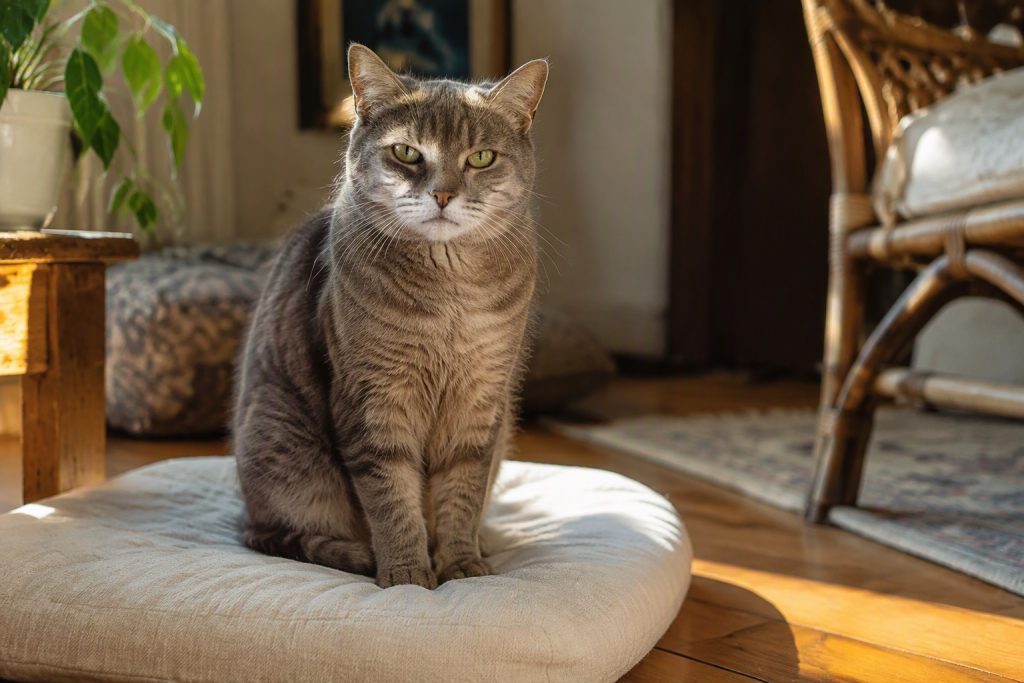
A cat that starts behaving differently in its senior years is not simply getting old. Behaviour change in an older cat is often the first visible sign of a treatable problem, and the conditions behind it are more common than most owners expect. Increased vocalising at night, confusion, house-soiling, irritability when handled, or a sudden reluctance to jump all have physical explanations more often than they have emotional ones. The right response is not to lower expectations but to have the cat assessed, because many age-related conditions are far easier to manage when they are caught early rather than late.
- Behaviour change in an older cat is usually a symptom rather than ordinary ageing.
- Common treatable causes include pain, dental disease, thyroid problems, kidney disease and high blood pressure.
- Sudden night vocalising, confusion or house-soiling should prompt a vet appointment.
- Do not assume a cat is simply getting old before a vet has examined it.
What behaviour changes are normal in an older cat?
Some slowing down is expected. Senior cats generally sleep more, play less intensely and for shorter periods, and may prefer warmer, lower and softer places to rest. They often become less tolerant of change and more attached to routine. Grooming may reduce, particularly around the lower back and hindquarters, which the cat can no longer reach comfortably. Claws may need more frequent trimming because they are used less for scratching. Older cats also feel the cold more, and they often seek out warm, low places to rest. What is not simply normal is a change in personality, in appetite, in litter box habits, in mobility or in vocalisation. A cat that becomes withdrawn, irritable, confused or noisy is showing a symptom rather than an age. The distinction matters because the first list is managed, and the second is investigated.

Deep red plush donut bed. Made from cloth. Supplied in light gray. Made for everyday resting. Gives a…
When is a change a sign of illness?
Treat any clear change from that cat’s own baseline as worth checking, especially if it appears over days or weeks rather than years. The conditions that commonly produce behaviour change in older cats include dental disease, which is very common and often painful; arthritis, which affects mobility and often shows first as reluctance to jump; an overactive thyroid, which produces weight loss, increased appetite and restlessness; kidney disease, which produces increased drinking and urination; high blood pressure, which can cause night vocalising and disorientation; and cognitive change, which produces confusion and altered sleep patterns. None of these can be diagnosed from behaviour alone, and none should be treated at home. A vet examination with blood tests and a blood pressure check can identify most of them.
Why does my senior cat wake up and cry at night?
Night calling in a senior cat is one of the most common reasons owners seek advice, and it usually has a physical driver. High blood pressure, an overactive thyroid, pain and cognitive change are all frequent causes, and so is simple disorientation in a dark house. A cat that cannot see or hear as well may call to locate itself, and one that is stiff may struggle to settle and become restless. The pattern often includes wandering, staring at walls and calling in a flat, repetitive way that sounds unlike the cat’s normal voice. Because the causes are medical more often than not, this is not a behaviour to train away. Book an appointment and describe when the calling happens and what else has changed, and read night vocalising for the wider picture.
Why is my senior cat going outside the litter box?
For older cats, litter box accidents are almost always a comfort or health problem rather than a protest. Arthritis makes it painful to step over a high-sided box, and a cat with stiff hips will often choose a flat, soft surface instead. Kidney disease and diabetes increase urine volume, so the cat may simply be unable to wait or may need more boxes closer by. Urinary tract disease and constipation cause discomfort that the cat associates with the box. Cognitive change can mean the cat forgets where the box is. The practical response is to lower the sides, add more boxes in more places, keep them very clean, and make the route to them easy. Then have the cat examined, because the underlying cause is usually medical and often treatable.

Round furry plush bed with cat ears on the rim. Made from velvet. Made for everyday resting. Gives…
Why does my older cat seem confused?
Confusion in a senior cat is a sign to take seriously rather than to explain away. A cat that stares into space, gets stuck in corners, fails to recognise familiar people, yowls at night or seems unsure of the layout of its own home may be experiencing cognitive change, but the same signs can come from high blood pressure, pain, impaired vision or hearing, or a metabolic problem. Cognitive change is a real condition in cats, and it is managed rather than cured, but it should only be assumed once other causes are ruled out. Practical support at home includes keeping furniture in place, leaving a night light on, keeping food, water and litter in fixed and easily reachable spots, and maintaining a steady daily routine. A vet can advise on what is appropriate, including whether any medication might help.
How can I make life easier for a senior cat?
Lower everything and keep it predictable. Provide shallow litter boxes with at least one entrance the cat can walk straight into, ramps or steps to favourite spots, and warm, soft beds in places the cat already chooses. Raise food and water bowls slightly if the cat seems stiff, and consider more frequent small meals if appetite is variable. Grooming help is often needed, particularly along the back and hindquarters. Keep the routine steady, because change is harder for older cats, and keep the environment warm because older cats feel the cold more. Weigh the cat monthly, because weight loss and gain are both meaningful, and keep a note of appetite, water intake and litter box habits. Regular check-ups become more valuable, not less, as the cat ages, and the signs cats hide are worth reviewing.
Frequently asked questions
- At what age is a cat considered senior? Many vets treat cats over about eleven as senior, with a middle-age phase from around seven. Individual cats vary considerably.
- Is my old cat’s grumpiness just age? Sometimes, but pain is a common cause of new irritability in older cats. Have it checked before accepting it as personality.
- Can cognitive change in cats be treated? It can often be managed, and some cats benefit from specific support. A vet should assess first and rule out other causes.
- Should I let my senior cat sleep more? Yes, extra sleep is normal. What matters is whether the cat still eats, drinks, moves and uses the litter box as usual.
- How often should a senior cat see a vet? Many vets recommend every six months for cats over about ten, since early changes are easier to manage.


