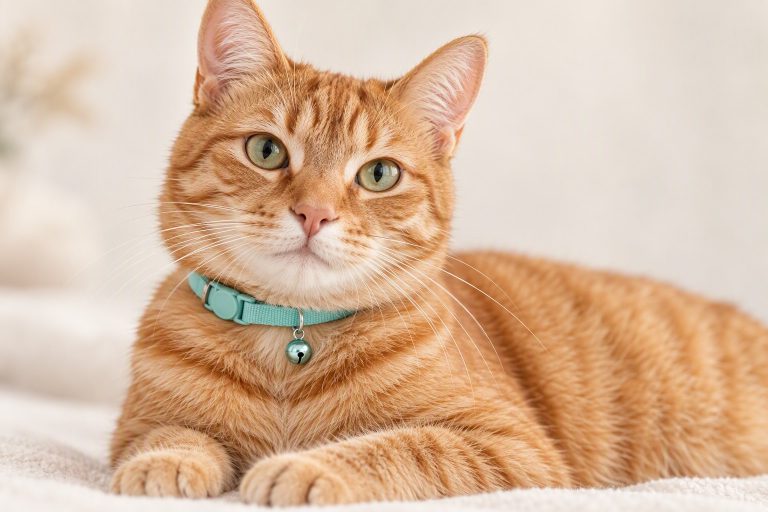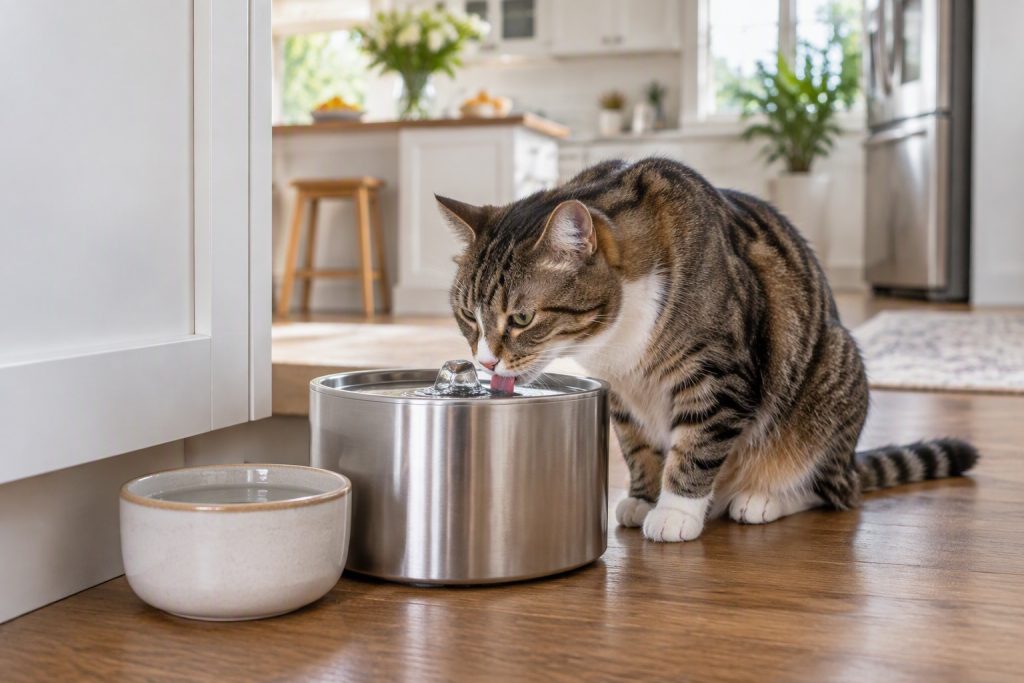
A water fountain encourages many cats to drink more because the water is moving, filtered, and often cooler than what sits in a bowl, while a bowl is simpler, cheaper, and silent. If your cat drinks well from a bowl, there is no need to change. If she is fussy, drinks little, or you feed dry food, a fountain is often worth trying.
- Fountains encourage drinking through moving, filtered water.
- Bowls are simple, quiet, and cheap.
- Many cats prefer running water by instinct.
- Both need daily cleaning to stay hygienic.
Is a water fountain better than a bowl for cats?
It depends on your cat, but fountains have real advantages. Moving water stays fresher and carries more oxygen, and the constant circulation through a filter removes hair and debris, so the water tastes cleaner. Many cats are drawn to running water because in the wild, still water can harbour bacteria, so an instinct tells them that flowing water is safer to drink. That instinct is why so many cats drink from taps and ignore their bowls. A fountain can therefore increase overall water intake, which matters most for cats on dry food or with urinary or kidney conditions. A bowl, on the other hand, is simple, silent, needs no electricity, and is easy to clean thoroughly. There is no single right answer, and some cats will drink happily from a plain bowl their whole lives. The best choice is the one that gets your cat drinking enough.
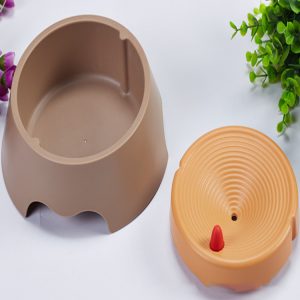
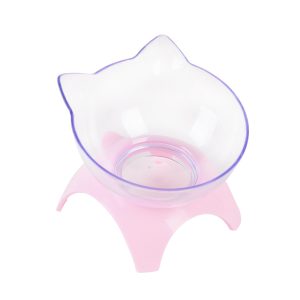
Pet drinking bowl. Part of the KiKi Meow Cat Feeding and Water collection for cats.
Why do cats prefer running water?
The preference is thought to be instinctive. In the wild, standing water can be contaminated, so cats evolved to favour fresh, moving sources, which are more likely to be clean. Cats are also very sensitive to the taste and smell of water, and still water in a bowl absorbs odours from the air and picks up dust, hair, and food particles over the day. Moving water stays aerated and cooler, and the sound and motion attract a cat’s attention. Whisker fatigue can play a part too: a narrow or deep bowl forces a cat’s whiskers to press against the sides, which some cats find unpleasant, so they drink less or avoid the bowl entirely. A fountain solves several of these problems at once, which is why it often increases how much a cat drinks. A wide, shallow bowl refilled often can achieve a similar effect at lower cost.
Do water fountains actually make cats drink more?
For many cats, yes, though not for all. Owners frequently report that a cat who barely touched her bowl started drinking noticeably more once a fountain was introduced, and that matters because cats have a naturally low thirst drive and often run mildly dehydrated. Increased intake is especially valuable for cats prone to urinary crystals, kidney disease, or constipation, and for any cat eating dry food. That said, a fountain is not a guaranteed fix. Some cats are frightened by the motor, dislike the sound, or simply prefer a bowl, and a few will ignore it entirely. If your cat is unimpressed, a wide ceramic bowl with fresh water in several locations can work just as well. The only reliable test is to try it and observe, and the measure that counts is how much she actually drinks, not how clever the gadget is.
What should I look for in a cat water fountain?
Choose a fountain that is quiet, easy to disassemble, and simple to clean, because a fountain you dread cleaning will quickly become unhygienic. Look for a design with few nooks and crannies, dishwasher-safe parts if possible, and a filter you can replace easily and affordably. Ceramic and stainless steel are often preferred over plastic, since some cats develop chin acne or dislike the taste of plastic, and they are easier to keep clean. Check the capacity against how many cats you have, and consider whether you want a pump with adjustable flow, a motion sensor, or a low-water indicator. Cordless or USB options add flexibility but need charging. Read reviews for noise and reliability, since a loud pump can put a cat off. Above all, pick one you will genuinely clean every few days, because a dirty fountain is worse than a clean bowl.
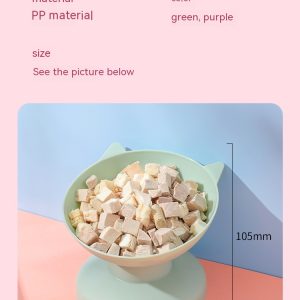
Cat Bowl Drinking Bowl Double Bowl To Protect Cervical Spine. Part of the KiKi Meow Cat Feeding and…
How do I keep a fountain clean and safe?
Cleanliness is the main drawback of fountains, so build it into your routine. Rinse the bowl and refill with fresh water daily, and give the whole unit a thorough wash every few days, including the pump, the impeller, and any crevices where biofilm forms. Replace the filter as the manufacturer recommends, usually every two to four weeks, and more often in a multi-cat home. A slimy film, a stale smell, or cloudy water means it needs cleaning immediately. Never let the pump run dry, and check the cord for damage, keeping it away from where your cat might chew. If your cat stops using a fountain she previously liked, clean it thoroughly first, because taste is often the reason. Our guide to the best water fountain for cats covers features that make cleaning easier, and our tips on a cat not drinking enough water help if she is still reluctant.
Which is right for my cat — fountain or bowl?
Start with what you already know about her. If she drinks readily from a bowl, keeps her water clean, and is healthy, a fountain is optional. If she ignores her bowl, drinks from taps, has had urinary or kidney problems, eats dry food, or you struggle to get her to drink, a fountain is a sensible experiment. Cats with sensitive whiskers or a dislike of plastic often do better with a wide ceramic or stainless steel bowl, and nervous cats may prefer the silence of a bowl. You can also offer both: a fountain in one room and a bowl in another, so she chooses. Whichever you use, refresh the water daily, place it away from the litter box and food, and watch how much she drinks. If her intake changes suddenly in either direction, that is a vet matter, not a shopping decision.
Frequently asked questions
- Are water fountains safe for cats? Yes, if cleaned regularly and used with a safe cord. A neglected fountain can harbour bacteria, so daily rinsing matters.
- Do I still need a bowl if I have a fountain? It is a good idea to offer both, at least at first, so your cat always has a familiar option and you can compare intake.
- How often should I clean a cat fountain? Rinse daily and wash the whole unit, including the pump, every few days. Replace the filter every two to four weeks.
- Why does my cat drink from the tap? Running water appeals to her instinct for fresh, clean water. A fountain mimics that and may satisfy the habit.
- Can a fountain help a cat with urinary problems? Increased water intake helps urinary and kidney health, but it does not replace veterinary treatment. Ask your vet about diet and monitoring.